You didn’t become a doula to answer emails. You became one for the births — the long quiet hours, the hand to hold, the calm voice at 3 a.m. But somewhere between clients, your phone fills up: an inquiry that needs a thoughtful reply, an intake form to send, a prenatal confirmation, a postpartum check-in, the invoice you keep forgetting. None of it is the work. All of it is exhausting.
This is the part of birth work AI is genuinely good for. Not the support — never the support — but the admin grind that’s quietly burning you out. The community has a clean way of putting it: AI is an assistant, not a doula. As perinatal educator Emily Little puts it, “AI can only replace tasks. It can never replace the soul of this work.”
So let’s hand it the tasks. Below are seven copy-paste templates for the messages you send every week, plus the one hard line you never cross.
The line, first
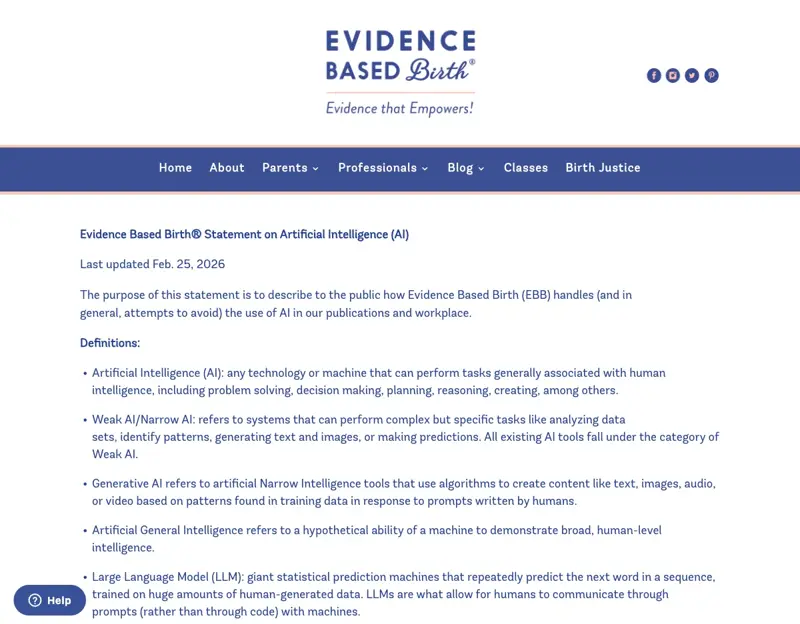
Before any of this, the rule that makes it safe: ChatGPT is for your business, never for birth. Evidence Based Birth®, in its 2026 AI statement, is blunt about it — large language models can hallucinate, carry bias, and leave out key details, so AI should never be used to give individualized medical advice or replace one-on-one counseling. It’s a drafting and organizing tool. It is not a clinician, and it is not you in the room.
Two practical guardrails follow from that, and they’re in every template below:
- Never paste a client’s private health details into ChatGPT — no names, no due dates tied to a name, no medical history. Anonymize everything (“a client,” “the family”). Pasting identifiable health info into a public AI tool is a real confidentiality risk.
- Always rewrite it in your voice. AI drafts; you make it sound like a human who cares — because the moment a client feels a form letter, you’ve lost the warmth that is your service.
The 7 templates
Each of these is a prompt you paste into ChatGPT (free is fine), fill in the brackets, and then edit. The trick that makes them not sound like a robot: tell ChatGPT your tone and keep it short.
1. The inquiry reply
“Write a warm, brief reply to someone who just inquired about my doula services. Mention that I offer [birth/postpartum] support, that my package starts at [price], and that I’d love to set up a free 20-minute call. Friendly and personal, not salesy. 120 words max.”
2. The welcome / intake intro
“Draft a welcoming first email for a new doula client who just booked. Warmly say I’m honored to support them, that I’ll send an intake form and we’ll schedule our first prenatal visit, and that they can text me anytime with questions. Keep my voice calm and reassuring. Short.”
3. The prenatal visit confirmation
“Write a short, friendly text confirming a prenatal visit. Include a line asking them to jot down any questions beforehand. Warm and low-pressure.”
4. The postpartum check-in
“Write a gentle check-in message for a client in her early postpartum weeks. Ask how she and baby are settling in, remind her I’m here for non-medical support, and keep it soft and unhurried. No advice, just presence.”
5. The payment / contract reminder
“Write a kind, no-guilt reminder that an invoice for [service] is due on [date]. Make it easy and warm — the opposite of a collections notice.”
6. The review request
“Write a short, humble message asking a happy past client if she’d be willing to leave a review about her experience with my doula support. Make it easy to say no. Genuine, not pushy.”
7. The referral thank-you
“Write a warm thank-you to a midwife/friend who referred a client to me. Brief, genuine, relationship-building.”
And the one you’ll use more than you expect — the “is this normal?” redirect:
“A client texted asking whether a symptom is normal. Write a warm reply that does NOT give medical advice — it gently encourages her to contact her midwife or OB, and reassures her that reaching out is always the right call.”
That last one matters. Redirecting medical questions to her provider — warmly, every time — is the scope-of-practice line, and AI can help you say it kindly without sounding cold.
What this means for you
If you’re a brand-new doula: Build these templates once and you’ve got a professional communication system from day one — the thing that usually takes years to develop. Just make every one sound like you before it goes out.
If you’re a busy solo doula: This is your burnout defense. The invisible workload — the follow-ups, the forgotten messages — is what drains the energy you need at births. Let AI carry the drafting so your presence goes where it counts.
If you’re in a collective or agency: Turn these into shared standard operating procedures (SOPs) for intake, on-call coverage, and communication boundaries, so every doula sends consistent, warm messages.
If you’re a bereavement or loss doula: Use AI only for the back-office scaffolding — never for the words that hold a grieving family. As the bereavement-doula community puts it, use it “without losing the heart of it.” The heart is always yours.
What it can’t (and shouldn’t) do
- It can’t do the support. Not the counseling, not the labor presence, not the trauma care. AI replaces tasks, never the relationship.
- It shouldn’t touch clinical questions. No symptom interpretation, no “should I be worried,” no labor-progress guidance. Redirect to her provider, every time.
- It doesn’t keep secrets. Anything you paste could be stored or used to train the model. Never put a client’s identifiable health details in. Anonymize, and turn off chat history/training in settings when you can.
- It will sound like a robot if you let it. Random bullet points, “I hope this message finds you well,” that flat corporate tone — clients feel it, and trust drops. Your edit is what makes it human.
- It’s not always right. Treat any “fact” it gives about pregnancy or birth as unverified. For anything clinical, your training and evidence-based sources win — not the chatbot.
The bottom line
The admin isn’t why you do this, but it’s real, and it’s heavy, and it’s quietly pulling you away from the families who need you present. ChatGPT can take the drafting off your plate — the inquiries, the intake, the check-ins, the invoices — in a fraction of the time, in your own voice, without ever crossing into the work only you can do.
Hand it the tasks. Keep the soul. That’s the whole game.
Want a repeatable system for using ChatGPT across your whole business — not just messages? Our ChatGPT for Business course walks small service providers through it step by step, with the privacy basics built in.
