It’s the third time today you’ve explained the difference between a 30-year fixed and a 7/6 ARM to a nervous first-time buyer, and you can hear yourself getting less patient. The numbers are simple to you. To the borrower, the rate sheet might as well be in another language — and a confused borrower is a borrower who ghosts you for the lender with the friendlier email.
Here’s the thing most “AI for loan officers” content gets wrong: it’s all CRM upsells and “will AI replace you?” fear videos. The actually-useful win is smaller and closer to home. You can hand ChatGPT a few rate options and get back a warm, plain-English email a borrower understands — in about two minutes, on the free tier. The catch is that mortgage is a regulated business, so there are a handful of things you must never let AI say. Let’s do both: the workflow, then the guardrails.
Why This Matters Now
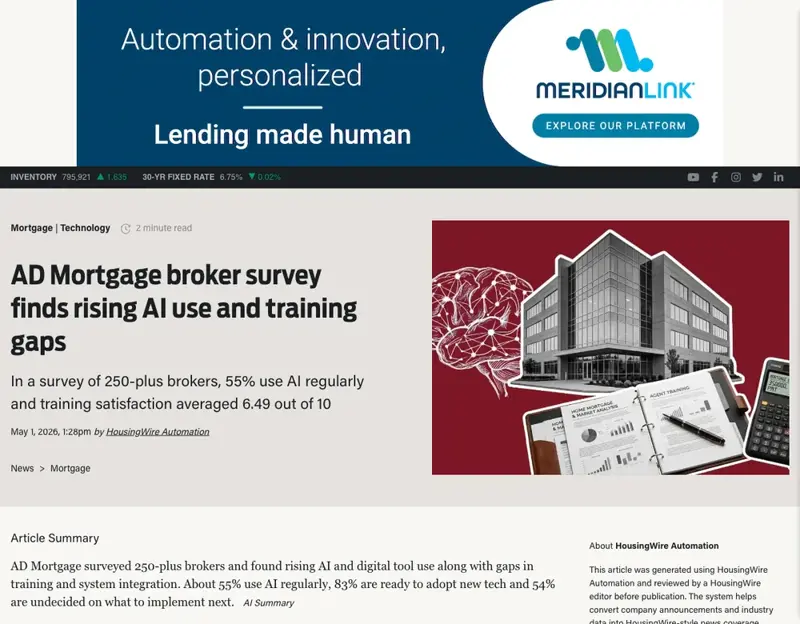
The mortgage industry is mid-stampede into AI, and the numbers are real. In AD Mortgage’s 2026 Broker Survey of more than 250 brokers, 55% now use AI daily or regularly, and 76.5% use a general-purpose tool like ChatGPT or Gemini. But look closer and you find the gap: only 34% use AI to navigate guidelines, and just 20.5% use it for marketing. The everyday borrower-communication win — the one that doesn’t need a single new piece of software — is sitting wide open.
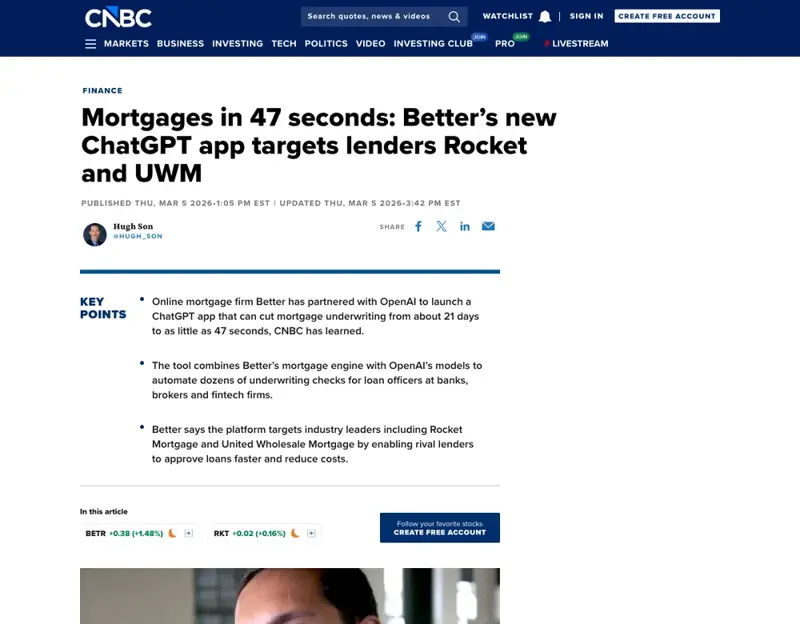
Even Better.com leaned in, launching a ChatGPT-based credit decision engine in March 2026 that CNBC headlined as approving mortgages “in 47 seconds.” That’s the underwriting end. You don’t need any of that to capture the simplest, highest-trust use: writing.
The Workflow: Rate Sheet → Plain-English Email
The move is to give ChatGPT the shape of the options and let it write the human part. Here’s a prompt you can save and reuse — notice it’s built to keep you compliant, not just fast:
You are helping me, a licensed loan officer, write a warm, plain-English
email to a borrower comparing their loan options. Audience: a first-time
buyer with no mortgage knowledge. Keep it friendly and reassuring, 8th-grade
reading level, no jargon (define any term you must use).

Here are the options I'm presenting:
[paste your options — e.g. "Option A: 30-yr fixed, payment around $X/mo.
Option B: 7/6 ARM, payment around $Y/mo for the first 7 years."]

Write the email so it:
- explains the trade-off between the options in plain terms
- ends by inviting them to call me to decide together
- does NOT state an APR, guarantee any rate, or say they're "approved"
- includes this line: "These numbers are estimates and not a commitment to
  lend; your official Loan Estimate has the binding figures."
Paste your options, and you get a borrower-ready draft. You read it, fix anything that’s off, add the real disclosures, and send. The same pattern handles your other daily writing: a five-touch follow-up sequence to keep a pre-approved buyer warm, a “what to gather for underwriting” checklist email, or turning a dense overlay into a sentence a borrower actually gets.
The framing that resonates — and the one top producers on X keep repeating — is this: AI isn’t replacing loan officers, it’s replacing the way most loan officers work. Let it handle the typing so you spend your hours on the relationship and the judgment calls. That’s the moat.
The Compliance Line: 6 Things AI Must Never Assert
This is the part the prompt listicles skip, and it’s the part that protects your license. There is no “AI exception” in mortgage rules — an AI-drafted email is held to exactly the same standard as one you typed yourself. Before you hit send on anything AI wrote, make sure it never:
- States a specific rate or APR without the required disclosures. Under TILA / Regulation Z §1026.24, if a rate appears, the APR and assumptions (loan amount, FICO, DTI, LTV, lock period) must appear with it. Keep specific numbers in your official Loan Estimate, not a chatty AI email.
- Says “pre-approved,” “guaranteed,” or “government-endorsed.” Those are prohibited under UDAAP and the MAP Rule. AI loves confident words; the regulator does not.
- Recommends a specific product to “negotiate terms.” Only you, the licensed MLO, can do that. AI can explain options; it can’t steer or close.
- Endorses a title company, inspector, or attorney in a way that implies a paid referral — that’s a RESPA Section 8 trap.
- Invents a reason for a denial or delay. Under ECOA / Reg B, adverse-action reasons must be specific and true, not an AI’s plausible-sounding guess.
- Touches a borrower’s private data on the free tier. Never paste SSNs, income docs, bank statements, or credit data into consumer ChatGPT — that’s a GLBA line. For anything with real borrower data, you need an enterprise tool with a no-training agreement.
A simple habit covers most of this: let AI write the explanation, never the numbers or the promises. Estimates and feelings, yes; rates, approvals, and personal data, no.
What This Means for You
If you’re a high-volume LO drowning in repetitive borrower emails, this is your hour back every day — the explaining, the follow-ups, the “here’s what’s next” notes. Build three saved prompts and you’ll never write those from scratch again.
If you’re a newer loan officer still finding your voice, AI is a great drafting partner for tone — warm, clear, never condescending. Just run every draft past the six-point checklist above until it’s second nature.
If you’re at a shop with a compliance team, bring them this list before you roll anything out. Showing up with “here’s where I’m keeping AI away from rates and PII” makes you the person who gets to keep using it.
If you’re worried AI will replace you, flip it: the LOs who lose are the ones who only did the typing. Hand off the paperwork, double down on the 9pm “talk me off the ledge” phone call no chatbot will ever make.
What ChatGPT Can’t Do Here
- It can’t quote a real rate. It doesn’t see your pricing engine, and even if it did, an emailed rate without disclosures is a violation. Numbers come from your systems.
- It can’t give compliant guideline answers you can rely on. It will confidently misstate an overlay or a DTI rule. Use it to draft the explanation, then verify against the actual guideline — never quote AI as the authority.
- It can’t keep a secret. On the free tier, assume anything you paste could be used to train the model. Borrower data stays out.
- It can’t build the relationship. The survey’s own finding — brokers rate their AI training a 6.49 out of 10 and 57% want more — tells you the edge isn’t the tool, it’s knowing where to point it.
The Bottom Line
The mortgage AI conversation is loud, expensive, and mostly about software you don’t need yet. The quiet win is free and available today: let ChatGPT turn your rate sheet into an email your borrower actually understands, keep it far away from rates and PII, and spend the time you save on the conversations that close loans.
Want the full borrower-communication system — the prompts, the five-touch follow-up sequence, and a compliance cheat-sheet you can pin by your desk? Our Housing & Mortgage with AI course is a practical, plain-English place to start, with the first two lessons free.
Sources
- AD Mortgage 2026 Broker Survey coverage — HousingWire
- The Intelligence Advantage: How AI is reshaping the American mortgage broker — Mortgage Professional America
- Better announces first conversational credit decision engine in ChatGPT — Better.com / CNBC
- Truth in Lending (Regulation Z) §1026.24 — Consumer Financial Protection Bureau
- Fannie Mae Lender Letter LL-2026-04: AI/ML Governance Framework
