Apple’s big keynote is Monday, June 8 — one day away as I write this. And after two years of “it’s coming,” the new Siri is finally expected to walk on stage. Here’s the thing most of the coverage is burying: the headline change isn’t what Siri says. It’s what Siri looks like.
For the first time, Siri is rumored to become its own app — a real chat window you scroll through, like ChatGPT or the Messages app. It glows out of the Dynamic Island in a new “Liquid Glass” animation. And underneath, the brain doing the thinking is reportedly Google’s Gemini, not Apple’s own AI.
If you’ve rolled your eyes at Siri for years, this is the relaunch to actually pay attention to. Let me walk you through what’s expected, what’s just a rumor, and — honestly — what a fresh coat of paint can’t fix.
First, a fair warning: none of this is official yet
Everything below comes from pre-keynote reporting — mostly from Bloomberg’s Mark Gurman, plus MacRumors, 9to5Mac, and The Verge. These outlets have good track records on Apple leaks, but “good track record” isn’t the same as “confirmed.” Apple hasn’t said a word on the record.
So read this as what to expect Monday, not what Apple announced. I’ll flag clearly where something is firm reporting versus a guess that’s floating around. By Monday night, we’ll all know which parts were right.
The new look: Siri becomes an app
This is the most-reported change, and it’s a genuinely big shift in how you’d use Siri.
Right now, Siri is a voice that pops up, answers (or doesn’t), and vanishes. There’s no memory, no scrollback, no “wait, what did you say earlier?” The new Siri is reportedly a standalone app that works like the AI chatbots you may already know:
- A real conversation window. You type or talk, and the back-and-forth stays on screen — the way a text thread does. Reporting from 9to5Mac describes two layout options: a clean single-conversation view (think ChatGPT) or a Messages-style list of past chats.
- History you can actually use. Past conversations show up in a list you can search, favorite, and return to. Forgot the recipe Siri helped you with on Tuesday? It’s still there.
- Auto-deleting chats for privacy. You’d reportedly be able to set conversations to delete after 30 days, after a year, or keep them forever — your call. That mirrors the disappearing-message option in iMessage.
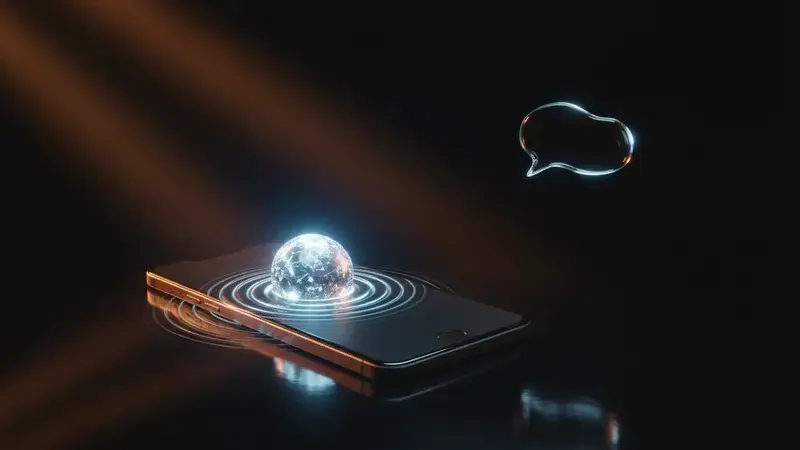
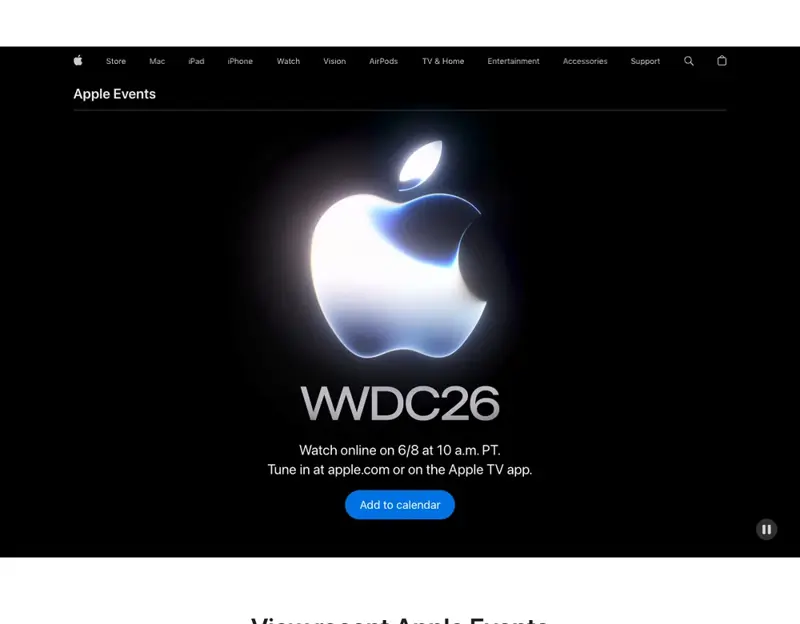
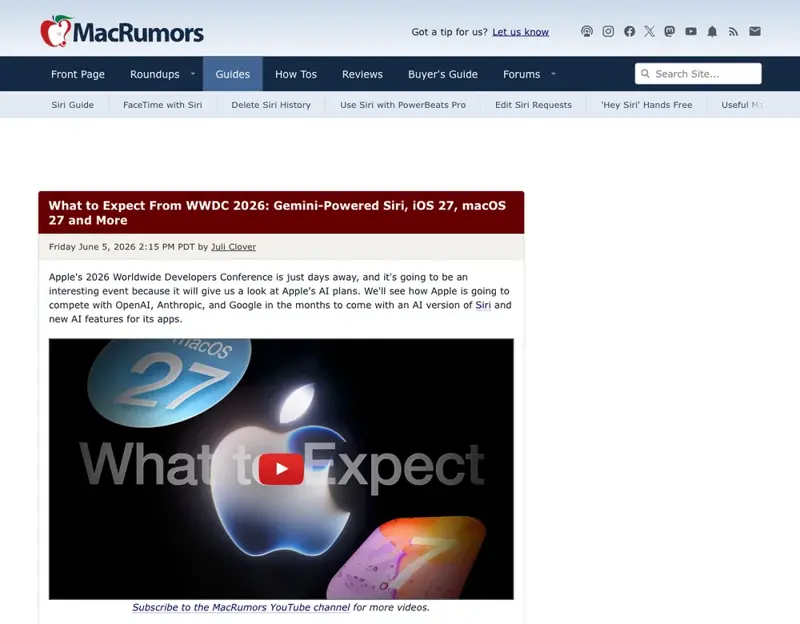
The visual signature is what people online are calling the “Liquid Glass” look. Liquid Glass is Apple’s new design language for iOS 27 — semi-transparent surfaces that bend and shift light like real glass. Siri is expected to live inside the Dynamic Island (that pill-shaped cutout at the top of newer iPhones) and then expand out of it into a glassy panel when you summon it. Early leak images and Apple’s own WWDC teaser graphic both point to this.
In plain terms: instead of a voice that interrupts your screen, you get a little glowing assistant that grows out of the top of your phone and holds a conversation.
The voice: here’s the honest part
You searched for the new Siri’s voice, so let me be straight with you: nobody has reported specifics on a new voice yet.
I went looking — through the leaks, the analyst threads, the X posts from people who track this stuff daily. The chatter is almost entirely about the look (the app, the Liquid Glass animation) and the brain (Gemini). On the actual voice — new options, a different tone, how natural it sounds — there’s basically nothing concrete before the keynote.
That doesn’t mean the voice isn’t changing. A smarter Siri that holds real conversations will probably sound different just by being better at language. But if you see a confident post claiming “the new Siri voice sounds like X” today, treat it as a guess. We find out Monday.
The brain: the Google Gemini twist
Here’s the plot twist that has tech circles buzzing. The smarter, more conversational Siri is widely reported to run on Google’s Gemini — a custom version of Google’s AI model — rather than something Apple built entirely in-house.
A couple of nuances matter here, because the internet is already running wild with this one:
- Your data reportedly stays on Apple’s turf. According to the reporting, the Gemini-powered Siri runs on Apple’s own “private cloud compute” servers — meaning it’s not a straight pipe handing your requests over to Google. Apple processes it on hardware it controls. That’s a meaningful distinction if the words “Google is reading my Siri requests” made you nervous.
- The “pick your own AI” idea is still a rumor. Some posts claim you’ll be able to swap in ChatGPT or Claude instead of Gemini, like choosing a default browser. It’s a plausible and much-talked-about idea — but as of the keynote eve, it is not firmly reported. File it under “would be cool, not confirmed.”
For everyday users, the takeaway is simpler than the drama suggests: a better engine is a better engine. Whether the badge says Google or Apple matters less to your morning alarm than whether Siri finally understands “remind me to call Mom when I get home.”
What this means for you
If you gave up on Siri years ago. This is the version built to win you back. But you’ve been burned before — so watch the real demos Monday, then wait for regular people (not launch-day hype) to report back before you believe it. A flashy keynote and a useful daily assistant are not the same thing.
If you’re on an older iPhone. The smartest features may require newer hardware — that’s the pattern with Apple’s AI so far. But the specific requirement isn’t confirmed yet, so do not upgrade your phone this weekend on a rumor. Wait for Apple to say which models are in.
If the Google news bothers you. Read the privacy fine print before you panic. The “runs on Apple’s private cloud” detail is the part that matters, and Apple will almost certainly make a big deal of it on stage. Judge it then, on the actual policy — not on a scary headline.
If you already live in ChatGPT, Claude, or Gemini. A built-in Siri chatbot could replace some of what you open those apps for — quick questions, drafting a text, summarizing something on screen. And if the “choose your model” rumor turns out true, you might even point Siri at the assistant you already trust.
If you’re the family tech-support person. This might finally be the year Siri is worth turning on for your less-techy relatives. After Monday, the one thing to check for them: whether their phone is new enough, and whether the good stuff is on by default or hidden behind a setting.
What a redesign can’t fix
A prettier Siri is still just a prettier Siri until proven otherwise. Five honest limits to keep in mind:
- New look, same risk of wrong answers. A Liquid Glass panel doesn’t make the information inside it correct. If the underlying AI gets your reminder wrong or makes up a fact, the animation won’t save you. Looks are the easy part; reliability is the hard part.
- It’s launching with a “beta” label — by Apple’s own choice. Reporting says even the public version this fall will carry a “beta” tag. That’s Apple quietly telling you: expect rough edges.
- Apple has over-promised Siri before. The last big Siri overhaul was announced in 2024 and then delayed for two years. Healthy skepticism isn’t cynicism here — it’s pattern recognition.
- It leans on a Google deal. Building your flagship feature on another company’s AI means your assistant’s future is tied to a partnership. Some longtime Apple fans read that as the company admitting it fell behind.
- The voice and hardware details are genuinely unknown. Anyone claiming certainty about how the new Siri sounds, or exactly which iPhones get it, is guessing until the keynote ends.
The bottom line
Monday, we find out whether the new look comes with new substance — whether Siri finally grew up, or just got a glassy new outfit. I’m cautiously hopeful and fully prepared to be underwhelmed. Both can be true.
But here’s the bigger point, and it’s the one I’d actually act on: you don’t have to wait for Apple to start getting real value out of AI. The same skills that make a chatbot useful — asking good questions, checking its work, knowing what it’s bad at — work today, in the apps already on your phone. A new Siri is nice. Knowing how to use any AI assistant well is what actually changes your week.
If you want to build that muscle, our AI Fundamentals course is the fastest place to start: the first 2 lessons are free, and no new iPhone is required. And if you’re trying to figure out which assistant deserves your trust, ChatGPT vs Claude breaks down the real differences in plain English.
Siri’s getting a makeover. Make sure your skills get one too.
Sources
- How to Watch Apple’s WWDC 2026 Keynote on June 8 — MacRumors
- What to Expect From WWDC 2026: Gemini-Powered Siri, iOS 27 and More — MacRumors
- What to expect from WWDC 2026: Siri’s highly anticipated revamp — TechCrunch
- We Finally Know More About Apple’s New Siri — Lifehacker
- WWDC 2026 Opens Monday: Gemini Powers Rebuilt Siri — TechTimes