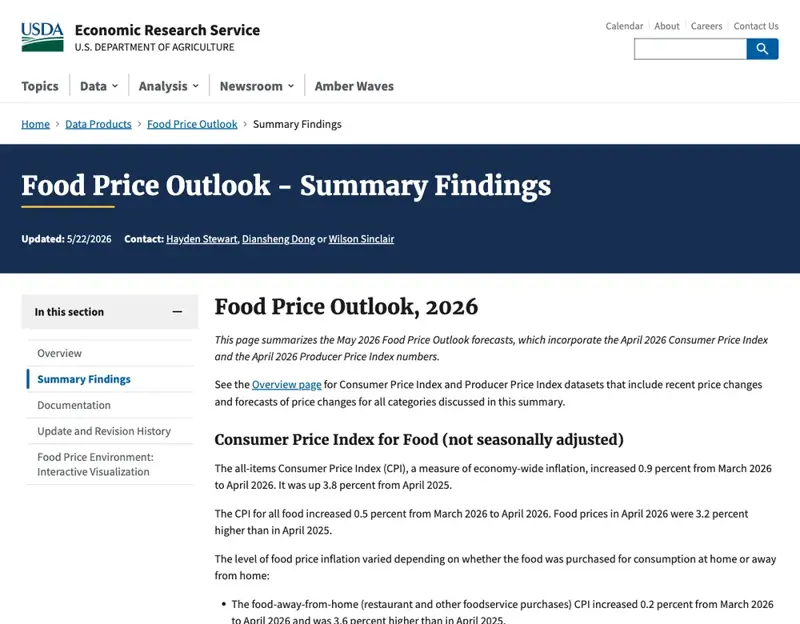
Your burger was priced when ground beef was one number. It’s a different, higher number now — USDA has beef and veal up roughly 6 to 9% across 2026, on top of being 12% above the prior year back in March. But your menu? Same price it’s been since last spring. That gap, quietly, is where your profit goes to die.
Here’s the brutal math most independent operators live with: ingredient costs move weekly, but most restaurants reprice their menu maybe two to four times a year. A dish that ran a healthy 28% food cost in January can be bleeding at 35% by March, and you’d never see it on the P&L until the quarter’s already gone. You don’t need a $300-a-month software subscription to catch it. You need about twenty minutes and ChatGPT. Here’s the workflow.
The 2026 Food-Cost Reality
A quick refresher so the numbers below mean something. Your food-cost percentage is the share of each sales dollar you spend on ingredients. The industry-healthy range is 28–35% for full-service and fast-casual (quick-service can hit 22–28%; casual dining sometimes creeps toward 40%). Cross 35% without raising prices and your margin — already thin — starts to vanish.
The problem in 2026 isn’t that you don’t know this. It’s the pace. Supplier invoices change weekly; menus change seasonally. The National Restaurant Association clocked menu prices up 3.6% year-over-year through April, and 71% of operators say they plan to raise prices this year, up sharply from 57% in 2025 (Popmenu’s survey of 328 restaurant leaders). Everyone feels the squeeze. The operators who win are the ones who find the leak before repricing across the board — because raising every price is how you lose regulars.
The 20-Minute ChatGPT Costing Workflow
The honest framing first: ChatGPT can’t see your supplier prices. It has no live data feed. You bring the numbers; it does the math, the analysis, and the recommendation in seconds. That division of labor is the whole trick.
Step 1 — Pick your 5 worst suspects. Don’t do the whole menu at once. Start with five dishes you suspect are tight: anything beef-heavy, anything you haven’t touched in a year, the “everybody orders it” item.
Step 2 — Feed ChatGPT the real numbers. For each dish, paste the recipe, the current cost of each ingredient (off your latest invoices), and what you charge. Then use a prompt like this:
You are a restaurant cost analyst. For each dish below, calculate:
1. Total ingredient cost per serving
2. Food-cost percentage (ingredient cost ÷ menu price × 100)
3. Contribution margin in dollars (menu price − ingredient cost)
Then classify each dish using menu-engineering quadrants based on the
popularity I give you:
- Star (popular + high margin), Plowhorse (popular + low margin),
- Puzzle (unpopular + high margin), Dog (unpopular + low margin)
Flag anything over 35% food cost. For each flagged dish, suggest 2 fixes:
a small price change OR a portion/ingredient swap. Show your math so I
can check it.

DISH 1: [recipe + ingredient costs + current menu price + roughly how
often it sells]
Step 3 — Read the verdict. In seconds you get each dish’s true food-cost %, its dollar margin, and which quadrant it lives in. The Plowhorses are the silent killers — popular dishes with thin margins that feel safe because they sell. A 50-cent price bump or a portion tweak on a Plowhorse, multiplied across a busy Friday, is real money.
Step 4 — Make the surgical change. Instead of raising everything, you fix the three dishes actually losing money — a small price move here, a swap from a pricier cut there, repositioning a high-margin “Puzzle” so more people order it. Then you check the math yourself (always) and update the menu.
This is the costing-and-margin half of running a smarter menu. The marketing half — rewriting descriptions, replying to reviews, writing the specials post — is its own quick workflow, and we covered that in our 30-minute weekly menu refresh. Together they’re the cheap, no-software version of what the big chains pay analysts to do.
What This Means for You
If you’re an owner-operator doing your own books, this replaces the napkin math and the gut feel. Twenty minutes a month, five dishes at a time, and you actually know which plates make money.
If you run a small group of locations, build the prompt once and hand it to each GM as a monthly task. You’ll standardize how everyone thinks about margin without buying a per-location software seat.
If you’re a chef who hates spreadsheets, this is the least painful way in. Talk to it like a sous chef — “this dish costs me this much, I sell it for this, what’s my margin?” — and it does the arithmetic you’ve been avoiding.
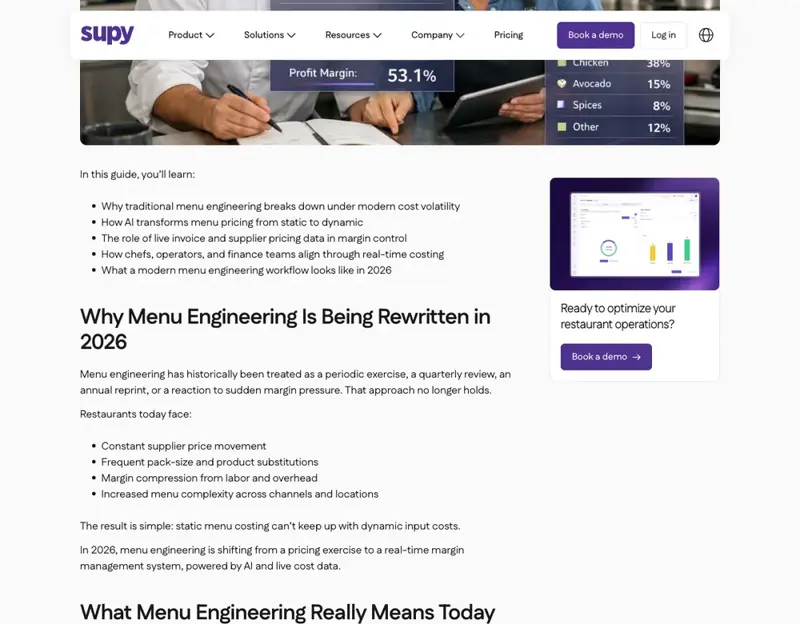
If you’re considering paid software (Supy, MarginEdge, Restaurant365), use ChatGPT as your “try before you buy.” If the manual workflow is saving you real money and you’re tired of inputting prices by hand, that’s when a tool with live supplier feeds earns its subscription. Start free; upgrade when you’ve outgrown it.
What ChatGPT Can’t Do Here
- It has no live prices. It will not know today’s beef cost unless you tell it. Garbage in, garbage out — the numbers you paste have to be current.
- It can make math errors. Always eyeball the arithmetic, especially on totals. Asking it to “show your math” (like the prompt does) makes the slips easy to catch.
- It doesn’t know your market. It can suggest a price; it can’t know your neighborhood will revolt at $19 for a burger. The pricing judgment stays yours.
- It’s a calculator and an analyst, not a strategist. It’ll find the leaks. Deciding whether to raise the price, shrink the portion, or kill the dish is a call only you can make with your regulars in mind.
The Bottom Line
Costs move weekly; most menus move twice a year; the difference is your margin. You don’t need to wait for the quarter-end P&L to find out which dishes are underwater. Twenty minutes, five dishes, and a free ChatGPT account will tell you tonight — then you make three surgical fixes instead of an across-the-board price hike that scares off your regulars.
Want the full system — recipe costing, menu engineering, and the pricing playbook that protects your margins without losing customers? Our AI for Restaurants & Food Service course walks through it step by step, with the first two lessons free.
Sources
- Food Price Outlook 2026 — USDA Economic Research Service
- Menu Prices economic indicator — National Restaurant Association
- Popmenu 2026 restaurant trends — 71% of operators plan price increases
- 2026 Menu Engineering with AI & live food costing — Supy
- AI for Restaurants: Where It Actually Pays Off in 2026 — Restaurant365
