Update, July 10, 2026: the June 15 change is live. Programmatic usage — Agent SDK,
claude -p, third-party agents on subscription auth — now draws from the separate monthly credit pool described below, while interactive Claude Code sessions stay on your normal subscription quota. The table and the math below hold; read them as “what is” rather than “what’s coming.” New to Claude Code entirely? Start with the install guide.
If you run Claude Code, the Agent SDK, claude -p, or any third-party agent that authenticates through your Claude subscription, your bill is about to change. Anthropic announced on May 13, 2026 that effective June 15, 2026, programmatic Claude usage moves off the shared subscription pool and onto a separate monthly credit pool — billed at full API rates. Pro gets $20 of credit, Max 5x gets $100, Max 20x gets $200. Unused credits do not roll over. The compute subsidy era for agentic workloads is ending.
This is the decision table I wish I’d had on May 13 — five workload profiles, real dollar costs, and a three-line rule for picking your plan.
What just changed (and what didn’t)
The change is structural, not just a price hike. Two pools, not one.
Programmatic surfaces — moves to the new Agent SDK credit pool, billed at API rates:
- Claude Agent SDK (Python + TypeScript) in your own scripts and agents
claude -p(non-interactive CLI mode)- Claude Code GitHub Actions
- Third-party agents that authenticate through your Claude subscription (OpenClaw, Zed’s unattended agents, Hermes, Conductor, etc.)
Interactive surfaces — stay on your existing subscription limits, unchanged:
- Interactive Claude Code in the terminal or IDE (you driving, one prompt at a time)
- Claude.ai chat — web, desktop, mobile
- Claude Cowork
The credit amounts by plan, straight from Anthropic’s help-center article:
| Plan | Monthly Agent SDK credit |
|---|---|
| Pro ($20/mo) | $20 |
| Max 5x ($100/mo) | $100 |
| Max 20x ($200/mo) | $200 |
| Team Standard | $20/seat |
| Team Premium | $100/seat |
| Enterprise (usage-based) | $20/user |
| Enterprise (seat-based Premium) | $200/seat |
Two important rules:
- Credits reset monthly, no rollover. Anthropic is explicit: “Unused credits don’t roll over to the next billing cycle.” Use-it-or-lose-it.
- Beyond the credit, you pay standard API rates. Either via usage credits configured on your account, or your jobs stop, depending on how you’ve set things up.
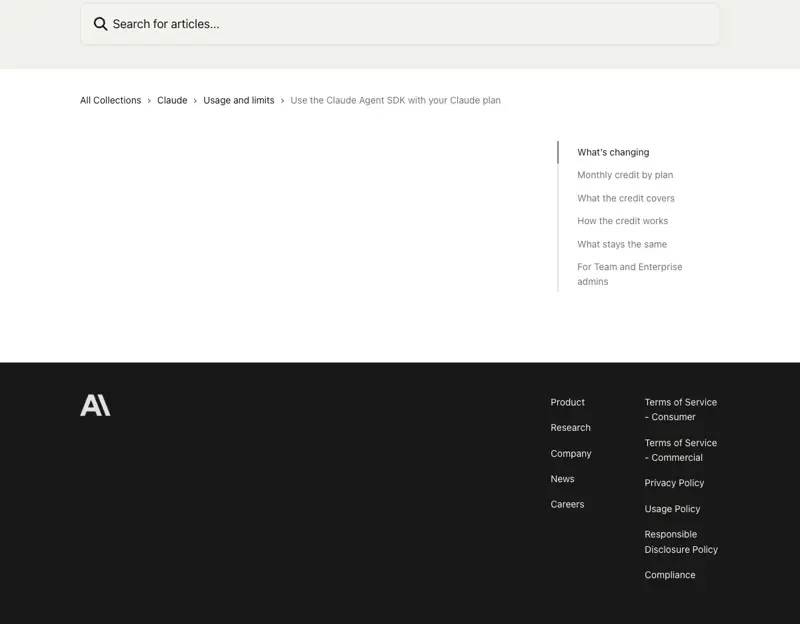
Source: Anthropic Help Center — Use the Claude Agent SDK with your Claude plan
The community reaction was loud. @bridgemindai’s May 15 thread — “ANTHROPIC JUST QUIETLY NERFED EVERY CLAUDE SUBSCRIPTION” — pulled 42K+ views and framed it as the third billing change in six weeks. The Medium piece “Claude Code Price Hike Finally Feels Like a Relief” flipped the same facts into a relief read. Zed’s own blog post walks Zed users through how their unattended-agent product gets affected. The math, though, is what matters — and the math doesn’t care about the framing.
The decision table (5 workload profiles, real $)
The token-rate math is straight from Anthropic’s pricing page:
- Haiku 4.5: $1 / $5 per million input/output tokens
- Sonnet 4.6: $3 / $15 per million input/output tokens
- Opus 4.7: $5 / $25 per million input/output tokens
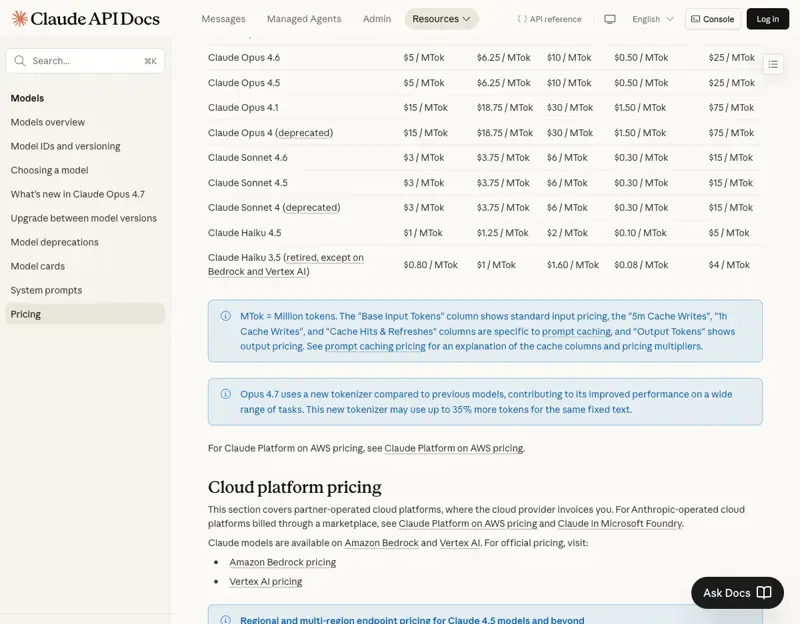
Source: Anthropic Pricing — Claude API per-token rates
For agentic workloads — PR reviews, scheduled refactors, GitHub Actions runs — Sonnet 4.6 is the workhorse. Let’s assume a typical PR-review burn: ~30K input tokens (the diff + relevant context + your standing review prompt) + ~5K output tokens (the actual review). That’s about $0.165 per PR review on Sonnet 4.6. Math: 30K × $3/1M = $0.09, plus 5K × $15/1M = $0.075, totals $0.165.
Now plug that into five real team profiles:
| Profile | Workload | Monthly cost (Sonnet 4.6) | Best plan | Rationale |
|---|---|---|---|---|
| Solo dev, 1 agent on the side | 50 PR reviews + 20 ad-hoc agent runs/mo (~$15) | ~$15/mo | Pro ($20) | Fits in the $20 credit. Plenty of headroom for an occasional Opus run. |
| 5-person team, Bugbot triage | 4 PRs/day × 20 days × 5 devs = 400 reviews/mo (~$66) | ~$66/mo | Max 5x ($100) at the team lead level | $100 credit covers the workload with 30% buffer. Saves ~$340 vs direct API. |
| 20-person team, full CI/Codereview | 4 PRs/day × 20 days × 20 devs = 1,600 reviews/mo (~$264) | ~$264/mo | Direct API + interactive on Pro | $264 is over Max 20x’s $200. Direct API beats subscription overage. Devs keep individual Pro for interactive. |
| 100-person platform team | 20 PRs/day × 20 days × 100 devs = 40,000 reviews/mo (~$6,600) | ~$6,600/mo | Enterprise usage-based + self-hosted | At this scale, the seat-based credit ($20/user) covers nothing meaningful. Enterprise usage-based contract + a self-hosted Coder/Sandbox fallback for non-critical workloads. |
| 5-person team, switching to Codex on Copilot Business | Same 400 reviews/mo via GitHub Copilot Business with GPT-5.3-Codex | ~$95/mo ($19/seat × 5) + $30 promotional Copilot credit per user through Aug | GitHub Copilot Business | Slightly cheaper than Max 5x for pure-CI workload, but loses Anthropic-specific tooling. See “When to switch” below. |
A few clarifications the table glosses over:
The $0.165/review figure is conservative. If your review prompt is unusually long (a 4,000-token standing instruction), or your diffs are above 30K tokens, costs scale linearly. A 200-line diff in a TypeScript repo with many imports might cost $0.30+. Calculate for your repo’s actual median PR size before committing.
Mixing models cuts the bill meaningfully. If 70% of your agent tasks could run on Haiku 4.5 instead of Sonnet 4.6 (lint-style checks, dependency-update reviews, simple regression scans), the per-task cost drops to $0.055. A 5-person team’s $66/mo becomes $22 — fits in Pro.
Opus 4.7 is the “I’m sure I want to spend $5” model. At $5/$25 per MTok, one Opus review at the same 30K/5K profile costs $0.275 — almost double Sonnet. Use Opus for hard refactor planning, not for routine PR reviews.
The three-line rule (pick your plan in 30 seconds)
If you don’t want to do the math for your specific team, here’s the rule that fits most cases:
- If your monthly agent spend is under $20 → stay on Pro. Your Pro subscription’s interactive limits still cover Claude.ai chat and interactive Claude Code; the $20 credit covers light agent work. Use Haiku 4.5 for routine tasks to stretch the credit.
- If your monthly agent spend is $20-$200 → Max 5x or Max 20x dominates. Subscription Max plans give you a 5x or 20x rate-limit multiplier on the interactive surfaces, plus the bigger Agent SDK credit. Max 5x for $50-$100/mo agent spend, Max 20x for $100-$200/mo.
- If your monthly agent spend exceeds $200 → go direct API. Subscription overage is more expensive than just buying the tokens directly. Keep individual Pro plans for interactive Claude Code; route all agent work through a direct API key with usage limits configured.
The corollary: never pay subscription overage if you can avoid it. Subscription overage is billed at standard API rates plus the subscription’s flat fee, which is strictly worse than just using direct API.
What changes on the GitHub side too
This isn’t happening in isolation. GitHub announced on April 27 that Copilot moves to usage-based billing on June 1, 2026 — nine days before Anthropic’s change. The structure is parallel: same flat seat prices ($10 Pro / $39 Pro+ / $19 Business / $39 Enterprise per user), but now each plan’s monthly grant of “GitHub AI Credits” (one credit = $0.01) is denominated equal to the seat price, and you pay per-token on top. Directions on Microsoft and ZDNet both have the full breakdown.
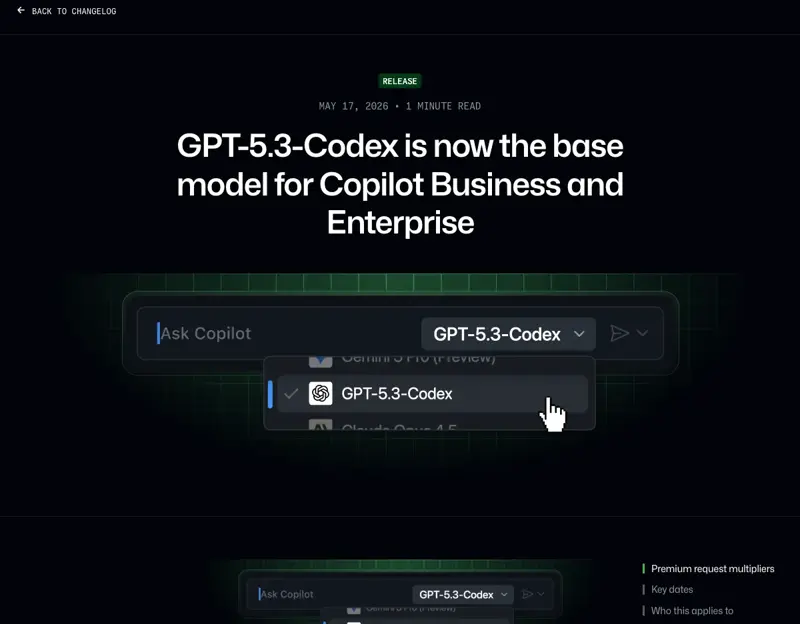
Source: GitHub Changelog — May 17, 2026
One sweetener: GitHub is giving Copilot Business users $30/user/month in promotional credits and Enterprise users $70/user/month for June, July, and August 2026 to cushion the transition. After August, you’re on the metered model.
For an eng-manager Q3 planning meeting, this means two AI dev-tool billing changes in 14 days. If your team is Claude-anchored, the math above is your guide. If you’re Copilot-anchored, the same logic applies — figure out your team’s median tokens-per-task and multiply through. If you’re using both, you need a separate read for each.
The third option is Cursor — whose pricing is unchanged through Q3. That’s becoming a competitive advantage in conversations I’ve had with platform-team leads this week. Not because Cursor is technically superior, but because it’s the only one of the three that isn’t asking you to do new math right before a quarter close.
What this can’t fix
The credit doesn’t roll over, period. If your team burns through $50 of agent credit in week one and then your CI is quiet for three weeks, you’ve still lost the unused $50 forever. Plan agent workloads to be steady, not bursty, or stay on direct API where you only pay for what you use.
Direct API doesn’t include any subsidy at all. When you migrate off subscription to direct API, you’re paying full token rates from the first request. That’s the deal. There’s no $20 freebie on direct API.
Switching to Codex/Copilot doesn’t reset the calendar. If you’re considering migrating Claude Code workloads to GPT-5.3-Codex on GitHub Copilot (the May 17 LTS announcement put Codex on a 12-month support track through Feb 2027), you still need to do the same per-token math on the new system before committing the team.
Anthropic isn’t going to reverse this. Between May 13 and May 23, there were no follow-up clarifications from @ClaudeDevs walking back any part of the policy. The Reddit threads, the Zed blog, the InfoWorld coverage — they all agree this is the new baseline.
The bottom line
The honest read on June 15 is: the era when a $200 subscription bought $1,000+ of pre-subsidy token spend is over. What you pay is now closer to what you consume. That’s painful for heavy agent users this quarter. It’s also clarifying — your token bill now corresponds to your actual usage, which makes budgeting easier going forward.
If you want to go deep on how to run Claude Code efficiently — picking the right model per task, building standing instructions that keep token usage in check, scheduling agents so they don’t burn through credit in week one — our Claude Code Mastery course is the next stop. For Q3 planning meetings specifically, Claude Code Routines Mastery covers the scheduled-agent patterns this billing change reshapes most.
The bigger question to put on your team’s calendar: what’s the cheapest model that still solves the task? That’s the question that defines your Q3 AI budget. Sonnet 4.6 is reflex. Haiku 4.5 is often enough. Opus 4.7 is for the moments where you actually need it.
Sources
- Anthropic Help Center — Use the Claude Agent SDK with your Claude plan
- Anthropic Pricing — Claude API per-token rates
- Anthropic — Claude Code Agent SDK docs
- InfoWorld — Anthropic puts Claude agents on a meter across its subscriptions
- The New Stack — Anthropic splits billing again: Agent SDK gets separate credit pools
- The Decoder — Claude subscriptions get separate budgets for programmatic use, billed at full API prices
- Zed — What Anthropic’s New Claude Billing Means for Zed Users
- Codersera — Anthropic’s June 15 Billing Change: What Every Claude Code & Agent SDK User Must Do
- Level Up Coding — Anthropic Just Quietly Raised Claude Pro Bill
- Medium — Claude Code Price Hike Finally Feels Like a Relief
- Reddit r/ClaudeCode — Anthropic’s June 15 announcement thread
- GitHub Blog — GPT-5.3-Codex is now the base model for Copilot Business and Enterprise (references June 1 billing move)
- ZDNet — GitHub Copilot moves to usage-based billing June 1, 2026
- Directions on Microsoft — GitHub AI Credits replace Premium Request Units
