
The tell that you were talking to a machine was never the voice. It was the waiting — you stop, a beat of silence, then it answers. Every voice assistant since Siri has had that pause, because underneath they all worked the same way: wait for the human to finish, then respond.
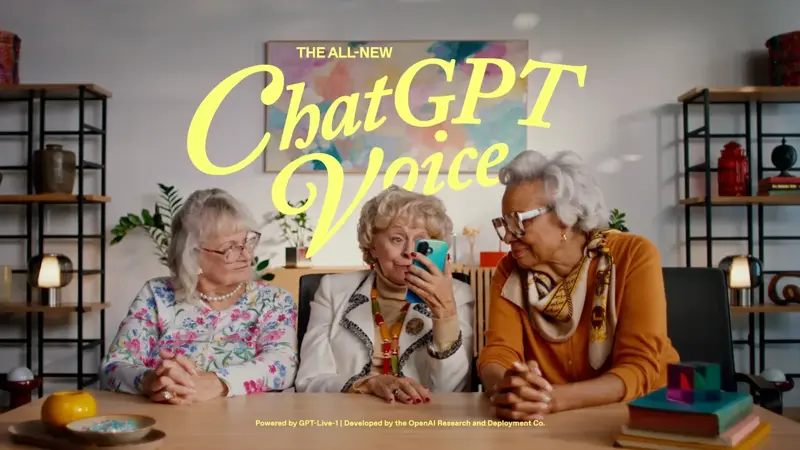
On July 8, OpenAI replaced ChatGPT’s voice mode with something built differently. GPT-Live listens and speaks at the same time — it can drop a “mhmm” while you’re mid-sentence, keep quiet when you pause to think instead of jumping in, and take an interruption without losing the thread. If you already use ChatGPT by voice, this update landed automatically. If you tried voice once and gave up, this is the week to try again.
We covered how to use ChatGPT’s voice mode in detail last week — that guide still applies. This is the news layer: what actually changed, who gets which version, and where the new voice stumbles.
What changed, in one minute
Voice mode used to be turn-based. The old system (Advanced Voice Mode) was one model handling audio end-to-end, but it still waited for silence before responding — which is why a thinking pause got you interrupted, and background noise sometimes ended your turn for you.
GPT-Live is full-duplex: it processes what it hears and what it says simultaneously, making little decisions many times a second — keep listening, speak now, stay quiet, look something up. Three practical differences:
- You can interrupt it mid-sentence and it adjusts instead of restarting.
- It backchannels — small “yeah” and “got it” signals while you talk, like a person actually listening.
- It waits when you’re thinking. Trailing off no longer triggers an answer to half a question.
There’s a second, quieter change: GPT-Live is only the conversation layer. When you ask something hard, it quietly hands the question to a bigger model behind the scenes (currently GPT-5.5) and folds the answer back into the chat. Ask about the weather or a stock and it can now pop a small visual card on screen — weather, stocks, sports, and maps at launch — while continuing to talk.
Who gets what (and what it costs)
Everyone got this automatically — there’s no toggle to find. The split:
| Plan | Voice model | The fine print |
|---|---|---|
| Free | GPT-Live-1 mini | Instant responses only; about 2 hours of voice a day |
| Go / Plus / Pro | GPT-Live-1 | Adds Medium and High “thinking” settings; near-unlimited daily use |
Two real-world footnotes from launch week. Paid use is “nearly unlimited,” but heavy sessions still hit a ceiling — one early user ran an English-vocabulary quiz while doing housework and got about 20 minutes on the full model before it quietly dropped to mini (their verdict: still far more natural than before). And background conversations end themselves after about an hour per session.
To start it: the voice icon at the bottom right in the mobile app, or on the right of the message box on the web. Same nine voices as before — remastered for the new system and noticeably better at staying intelligible over traffic or kitchen noise.
What it’s genuinely good for
The natural turn-taking isn’t a party trick; it changes which tasks voice can handle:
- Language practice. This is the standout. Real conversation rhythm — interruptions, hesitations, being politely waited for — is the thing textbooks can’t give you. The research on conversational AI for language learning is genuinely encouraging (a 2024 meta-analysis across 31 studies found a solid positive effect on second-language learning, and controlled studies keep finding reduced speaking anxiety), with one honest caveat: nobody has formally studied this generation of full-duplex voice yet. Early users are already running vocabulary drills while folding laundry.
- Hands-busy moments. Cooking, driving, commuting — the places where the old mode’s interruption habit was most annoying are where full-duplex shines.
- Talking to think. Rubber-ducking a decision out loud works better when the other side knows when to stay quiet.
- Kids and older relatives. One parent’s launch-week report: their four-year-old held an actual back-and-forth conversation with it. The interface is speech — no UI to learn.
Where it stumbles (early-user consensus)
Honest section, from three days of real reactions:
- Some people miss the old voice. The most common complaint isn’t technical — it’s tonal: the new voices strike some users as flatter, “more plastic,” less warm than Advanced Voice Mode. Reasonable people disagree; try it and judge.
- It can be too eager to talk. Full-duplex cuts both ways — a system allowed to interject sometimes interjects when you didn’t want it. A few users find the interruptions aggressive.
- Launch-week latency was rough for some. First-day traffic made “instant” feel anything but, for part of the rollout. That class of problem usually fades within days.
- Free-tier mini is the same trick, smaller brain. The conversational flow is there, but it thinks at the Instant level only — fine for chat and practice, thinner for real questions.
- The smarts still come from the model behind it. GPT-Live makes the conversation feel human; it doesn’t make the answers more correct. Verify anything that matters, same as in text.
The bottom line
Voice was the ChatGPT feature everyone tried once and most people quietly abandoned. GPT-Live fixes the specific thing that made it awkward — the rhythm — and gives the free tier a real version of it. Give it one hands-busy task this week: a language drill, a talked-through decision, dinner prep with follow-up questions. You’ll know within ten minutes whether it’s for you.
And if you want to get genuinely good at directing AI — voice or text, whatever OpenAI renames next — the fundamentals don’t change: AI Fundamentals covers the thinking, and our everyday ChatGPT course covers the daily habits.
Sources
- Introducing GPT-Live — OpenAI (July 8, 2026)
- OpenAI releases new voice models for more natural live conversations — TechCrunch
- OpenAI Introduces GPT-Live to Make ChatGPT Voice Feel Like a Real Conversation — MacRumors
- Voice Mode FAQ — OpenAI Help Center
- The effectiveness of chatbots on L2 learning: a meta-analysis (Lyu et al., 2024)