

Two things converged in the last 14 days that the average engineering lead hasn’t fully wired up yet:
- DeepSeek’s 75% promo on V4 Pro ends May 31, 2026 at 15:59 UTC. Per DeepSeek’s own pricing docs, V4 Pro drops from $1.74/$3.48 per million tokens (input/output) to $0.435/$0.87 during the promo window — roughly 5x cheaper than list. Then it snaps back. T-27 days from today.
- GPT-5.5 + Codex are now on AWS Bedrock alongside DeepSeek V4 Pro and V4 Flash. After the April 27 OpenAI–Microsoft non-exclusive deal, Bedrock is no longer a “DeepSeek + Anthropic + Llama only” console. It’s the multi-vendor console.
What this means for procurement: the question isn’t “should we move from Azure OpenAI to Bedrock to chase the DeepSeek promo.” That’s the wrong frame. The right frame is: with GPT-5.5 and DeepSeek V4 Pro now reachable through the same Bedrock InvokeModel call, which workloads should route to which model, on which Region, before the promo arbitrage closes May 31?
Here’s the 20-minute audit. Engineering lead with a coffee, the AWS console open in one tab, your existing model usage logs in another.
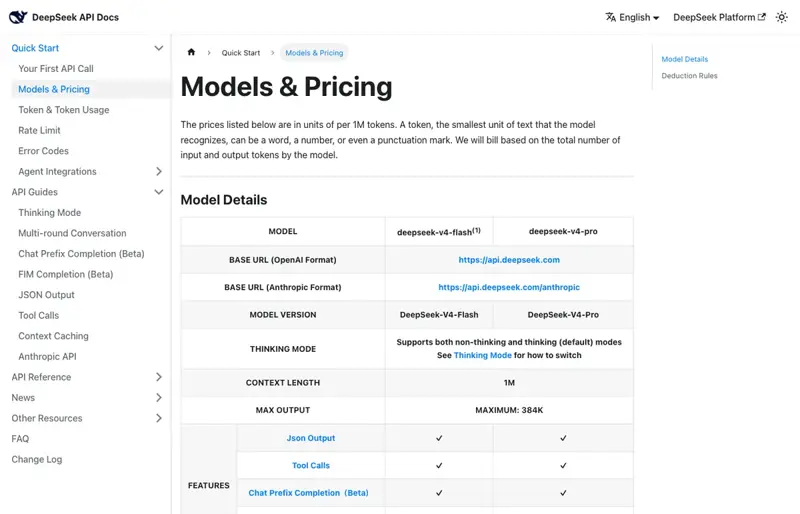
The pricing math, with verified numbers
| Model + tier | Input ($ / 1M tokens) | Output ($ / 1M tokens) |
|---|---|---|
| DeepSeek V4 Pro list | $1.74 | $3.48 |
| DeepSeek V4 Pro promo (until May 31) | $0.435 | $0.87 |
| DeepSeek V4 Flash (no promo) | $0.14 | $0.28 |
| GPT-5.5 (typical tier) | ~$5 | ~$30 |
| Claude Sonnet 4.6 | $3 | $15 |
The promo arithmetic that matters: at $0.435/$0.87 (V4 Pro promo) vs ~$5/$30 (GPT-5.5), you’re saving about $4.57 per 1M input tokens and $29.13 per 1M output tokens. For a system generating 500M output tokens per day, that’s around $391/day in raw savings, or roughly $11K to $12K over a month before cache-hit amplification.
Cache pricing is where the math gets aggressive. Per breakdowns at Knightli and on r/DeepSeek, cache-hit input tokens drop from $0.145 → $0.03625 (V4 Pro pre-promo) → as low as ~$0.0037 per 1M when you stack the 75% promo plus the 90% cache-hit discount. One r/DeepSeek user reported running 60M tokens for $0.50 using V4 Flash + heavy cache.
That’s the headline. Now the question is whether you can actually capture it without breaking your stack.
The 4-question Bedrock-route audit
Question 1 — Are your existing Azure OpenAI calls migration-ready?
This is the gate question. If your code talks to Azure OpenAI through a thin wrapper or an internal “LLM client” abstraction, you can route to Bedrock with config changes. If your calls are direct REST hits to Azure OpenAI endpoints with hardcoded deployment names, you’re looking at a real migration project.
The clean answer: teams that already adopted an AI gateway (LiteLLM, Portkey, Cloudflare AI Gateway, in-house) flip Bedrock on fastest. NextFuture’s case study reports a real production workload going from $4,200/month to $1,650/month — a 60% cut — primarily from semantic caching plus automatic fallback to cheaper models, the same pattern Bedrock users replicate with their own routing layer.
If you’re not on a gateway today, the audit answer is: build the gateway first, then chase the promo. Direct migration in 27 days is a mistake. Gateway in 27 days is reasonable.
Question 2 — Does your data-residency posture permit DeepSeek-via-Bedrock?
Per AWS Bedrock’s regional-availability documentation, there are three routing modes:
- In-Region — keeps all traffic in one Region. Strict residency; bound by that Region’s quota.
- Geographic cross-Region — stays within a geography (EU only, US only, etc.). Looser residency, higher throughput.
- Global cross-Region — uses any commercial Region. Highest throughput, weakest residency guarantee.
For DeepSeek V4 Pro specifically, you need to check which Regions actually have it for your account. Bedrock rollouts typically start US-East and US-West, with EU and APAC following. If you’re an EU-residency-required shop, V4 Pro may not be in-region yet.
The decision: if EU-only is a hard requirement, audit which Regions host V4 Pro before making the migration call. If you can use geographic cross-Region within EU, you can probably move. If you need in-Region only and V4 Pro isn’t there, defer.
Question 3 — What’s your fail-rate budget for mid-pipeline switches?
The honest production reality: Bedrock’s default quotas can be far below what teams are used to on Azure OpenAI or direct OpenAI, especially for new or premium models. Multiple posts on r/aws and the AWS forums document teams hitting throttling on POCs and being forced into provisioned throughput earlier than expected.
Per AWS’s Bedrock quotas page, one quota entry shows 10,000 on-demand RPM for DeepSeek V3.2; cross-Region tokens-per-minute for Anthropic models run into hundreds of thousands. The numbers vary wildly by model and tier.
The audit answer: before you switch a production workload, run a 100-run load test through Bedrock at your actual peak QPS. Track the throttling rate. If it’s above 0.5%, request a quota increase or move to provisioned throughput. If your fail-rate budget is sub-0.1% (regulated workloads), provisioned throughput is mandatory; on-demand is not enough.
Question 4 — Where is the promo arbitrage actually worth the migration cost?
This is the spreadsheet question. Per workload, calculate:
(monthly tokens × promo savings per token) - (estimated migration cost) = net gain
For a workload generating 1B output tokens/month, the promo saves about $2,610 vs list price. Migration cost is your eval suite + version-pin + rollback plan + 1-2 days of engineering. If migration costs less than 1 month of promo savings on the workload, migrate before May 31. If it’s the other way around, defer to the post-promo $1.74/$3.48 tier — still cheaper than GPT-5.5, just not 5x cheaper.
The workloads that almost always pay for the migration:
- Bulk coding agents (high output tokens, high cache hits)
- Long-horizon agents that read large context repeatedly (cache-amplified savings)
- Background data enrichment / classification pipelines
The workloads that often don’t:
- Low-volume internal tools (the promo savings don’t cover migration overhead)
- Latency-critical user-facing endpoints (the throttling risk is too high)
- Anything where SWE-bench-tier reasoning matters more than output cost (see Q5 below)
Where DeepSeek V4 Pro actually beats GPT-5.5 (and where it doesn’t)
A few benchmark anchors from public eval data:
- SWE-bench Verified: DeepSeek V4 ~81%, GPT-5.5 82.60%, Claude Opus 4.7 82.00%, Sonnet 4.6 ~73% per the Vals AI leaderboard and TokenMix Research. V4 is competitive but slightly below GPT-5.5.
- SWE-bench Pro: V4 Pro Max at 55.4% per DeepSeek’s own marketing.
- Terminal Bench 2.0: V4 Pro Max at 67.9%.
- Internal coding suites (per Hugging Face’s recap): V4 Pro Max ~67% vs Sonnet 4.5 ~47% and Opus 4.5 ~70%.
Read the leaderboards honestly: GPT-5.5 still leads on the hardest reasoning evals, V4 Pro is a fraction of the cost and beats Sonnet 4.6 on coding, and Claude Opus 4.7 is the upper bound when correctness matters more than spend.
The implication for routing: GPT-5.5 for planning + hardest reasoning steps, DeepSeek V4 Pro for bulk coding + tool-use steps, Sonnet 4.6 for nuanced writing tasks where DeepSeek’s English fluency lags. That’s the multi-vendor pattern Bedrock now lets you implement in a single InvokeModel switch statement.

What this means for you, by org type
If you’re an engineering lead at a Series A / B startup with 1-3 production LLM workloads: Move the bulk-token workload to V4 Pro on Bedrock if you have a gateway already. Defer if you don’t — building the gateway first is the better Q3 investment.
If you’re a CTO at a mid-market SaaS with Azure OpenAI in production: The promo isn’t worth a panic migration. The right move is to start the multi-cloud project now (5- to 8-week scope), use Bedrock-routed DeepSeek for new features starting June, and ramp Azure-OpenAI workloads gracefully. Don’t migrate prod traffic before May 31.
If you’re a platform engineer at a regulated shop (financial / healthcare / EU): Data residency is the gate. Audit which Regions host V4 Pro for your account first; if your residency requires in-Region only and V4 Pro isn’t in your Region yet, the promo is irrelevant to you. Watch the next 30-day Bedrock release cycle and reassess.
If you’re running a small internal LLM-ops practice (1-3 engineers): The cache-amplified V4 Flash math (60M tokens for $0.50) is where you should focus. Flash isn’t on the promo, but its baseline pricing plus aggressive caching is the cheapest production-grade tier in the market today. Skip the promo arbitrage; build a Flash-first workflow.
If you’re a research engineer building agent prototypes: V4 Pro at promo pricing is a research-grade subsidy — you can run more experiments per dollar than at any other point this year. Use it now. The post-May-31 list price is still cheaper than Anthropic, but the promo is your real window.
Honest limits on the audit
- Bedrock’s V4 Pro availability is limited preview in some Regions. Verify before you commit. If your account doesn’t have access yet, request preview access and budget for delays.
- There’s no public Azure OpenAI → Bedrock migration case study yet. Cost deltas are clear from list-price math, but operational experiences are still anecdotal. Do your own load test.
- The ~$391/day savings example assumes 500M output tokens/day, which is a high-volume workload. Most teams will see hundreds to low thousands of dollars saved monthly, not five figures. Don’t oversell the math to your CFO.
- Bedrock’s quotas are not the same as direct API quotas. The convenience of consolidated billing comes with throttling realities you have to design around. Provisioned throughput is the answer for high-QPS workloads — and it costs.
- DeepSeek V4 Pro is not a drop-in replacement for GPT-5.5 on the hardest reasoning evals. If your workload’s failure mode is “wrong answer,” you’ll save money you don’t want to save. Eval first, route second.
The bottom line
T-27 days to the May 31 promo deadline. The math is real ($391/day for the 500M-token-per-day workload, less for smaller shops, but always favorable vs GPT-5.5 list). The Bedrock console is the lever — same InvokeModel API, different model, different price. The audit is whether your existing stack lets you flip the lever this month or whether you need to spend the next four weeks building the gateway that would let you flip it next month at non-promo pricing.
For most mid-market shops, the honest answer is: build the gateway in May, take the promo arbitrage on the workloads ready to flip, and run the bulk migration in June. That captures most of the long-term savings without breaking production for a 27-day window.
If you want the longer-form playbook for this — gateway patterns, model-routing rubrics, the eval suite that catches Sonnet-vs-DeepSeek divergence before it ships — our Claude Code Mastery course covers the engineering-side of multi-model production stacks. Free to start, Pro for the full path.
Sources
- DeepSeek API Pricing — official
- DeepSeek V4 Pro promo end date confirmation — DeepSeek
- The next phase of the Microsoft–OpenAI partnership — OpenAI
- Amazon Bedrock pricing — AWS
- Amazon Bedrock cross-Region inference — AWS docs
- Bedrock quotas — AWS docs
- Vals AI SWE-bench leaderboard
- TokenMix Research — DeepSeek V4 evaluation
- r/DeepSeek — V4 Flash + cache token economics
- nOps — moving GPT-4o to DeepSeek R1 on Bedrock case study