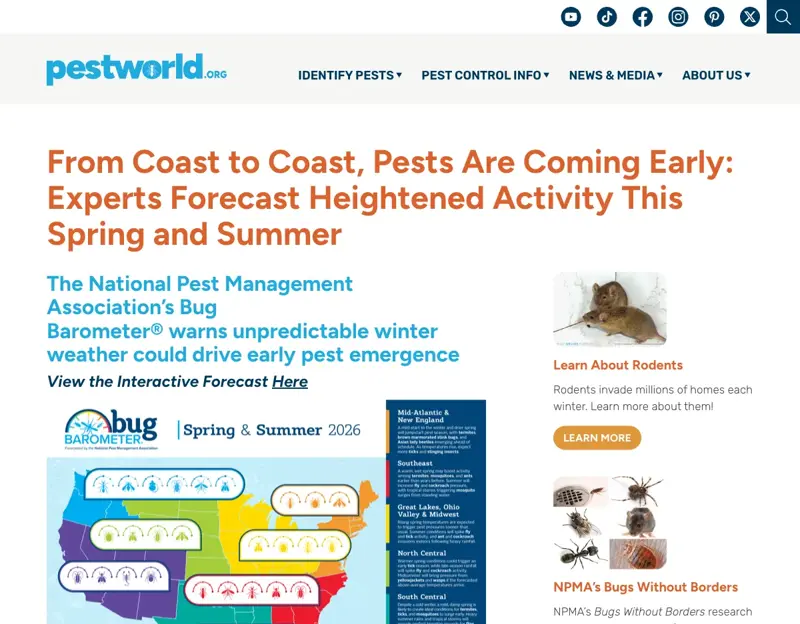
The 2026 pest season arrived early and angry. NPMA’s forecast calls for pests emerging “sooner and in greater numbers” coast to coast, CDC tracking puts tick-bite ER visits at their highest since 2017, and on X this week a homeowner posted about finding the first tick her dog has ever had. Every one of those ticks, ants, and mosquito swarms turns into the same thing on your end: another message you owe somebody.
Here’s the math that should bother you more than the bugs: 62% of calls to small service businesses go unanswered, most of those callers never call back, and a lead you answer within 5 minutes is 21 times more likely to turn into a qualified conversation than one you get to after half an hour. In peak season, the messages you don’t send are the revenue you don’t book. These seven prompts turn the daily message pile into one 20-minute sitting.
Before the prompts: the one rule
ChatGPT writes your customer messages. It never answers chemical questions — no product picks, no rates, no re-entry times, no “is it pet-safe.” That’s label territory, and the label is the law — we drew that line in detail, with the federal citation and the research on how confidently ChatGPT gets chemistry wrong. Read it once before you adopt any of this. Every prompt below is built to keep facts in your hands and only the wording in ChatGPT’s.
One setup step: open ChatGPT and start a chat with “You write short, friendly customer messages for my pest control company, [name], in [city]. Plain English, no exclamation marks, no scare tactics, never any product names or safety claims I don’t give you.” It’ll hold that instruction for the conversation. Now batch your day.
The 20-minute daily inbox routine
Prompt 1 — The new-inquiry reply (do this one first, always)
Write a reply to this new customer inquiry: [paste their message]. Thank them, tell them we can have a technician out [day/time window], ask for their address and the best callback number, and mention we’ll confirm by text. Under 80 words.
The 5-minute window is where leads live or die. A fast, warm, specific reply beats a perfect one tomorrow.
Prompt 2 — The missed-call text-back
Write a text to someone who just called and didn’t reach us: apologize briefly, say we’re in peak season but their call matters, ask if it’s about a new pest issue or an existing service, and promise a callback by [time]. Under 50 words.
Most callers who hit voicemail never call back — but nearly everyone reads a text within 5 minutes. This one prompt quietly plugs the biggest leak in a small operator’s funnel.
Prompt 3 — The quote that went quiet
Write a follow-up to a customer we quoted [X days] ago for [service]. Friendly, no pressure. Mention this season is unusually heavy for [pest] in our area, so earlier scheduling holds their preferred slot. End with one clear question: would they like the [day] appointment? Under 90 words.
The seasonal line isn’t a scare tactic — it’s this year’s truth, and it gives the nudge a reason to exist.
Prompt 4 — The no-show rescue
Write a text to a customer who missed today’s appointment. No guilt. Say we know summer schedules are chaotic, offer two specific reslot options ([option A] / [option B]), and ask which works. Under 60 words.
Service businesses average a 23% no-show rate, and reminder texts cut no-shows by up to half — so pair this rescue with Prompt 5 and you’ll need it less.
Prompt 5 — The post-treatment “what to expect”
Write a message for a customer whose [treatment type] we completed today. Using only these facts: [e.g., “treated kitchen and exterior perimeter; seeing more ants for 3–5 days is normal as the bait works; don’t clean the baited areas”]. Reassuring, plain English, under 100 words.
The “why are there MORE ants now?!” callback is the most preventable call in the trade. This message prevents it.
Prompt 6 — The seasonal add-on for existing customers
Write a short email to existing quarterly customers offering our mosquito treatment add-on. Mention this summer’s heavy mosquito forecast for our region, that they already trust us with their home, and one plain-dollar price: [$X/month added]. One link placeholder, one sentence call to action. Under 120 words.
85% of residential pest revenue is recurring — your existing list is the cheapest growth you have, and this is the season they’ll actually say yes.
Prompt 7 — The review ask (same day, while they’re happy)
Write a text asking [first name] for a Google review after today’s [service]. Mention one specific detail from the visit: [e.g., “we found the entry point behind the deck”]. Include the link placeholder [review link]. Grateful, not desperate, under 50 words.
The specific detail is what separates a review ask that converts from one that reads like a robot sent it. You supply the detail; that’s the part that can’t be faked.
What this means for you
If you’re solo and drowning: Don’t adopt seven prompts. Adopt Prompts 1 and 2 — the two that touch new revenue — and run them from your phone between jobs. Add the rest when the season slows.
If you have an office manager: This is their new morning block: 20 minutes, yesterday’s pile, all seven prompts in one ChatGPT conversation. Their writing fatigue is real; this removes the composing, keeps the judgment.
If you’re already paying for a field-service platform: Keep it — Jobber, Housecall Pro, and PestPac automate the sending and scheduling. These prompts fix the messages your platform doesn’t write, or writes like a robot. The two stack fine.
If your bottleneck is the phone, not the inbox: A text-back (Prompt 2) is the free version of an answering service. If call volume is truly unmanageable, the $39–$279/month AI answering services exist — but try the free fix for two weeks first.
What these prompts can’t do
They can’t send anything. ChatGPT drafts; you (or your platform’s automation) deliver. Free ChatGPT doesn’t connect to your CRM or your texting line.
They can’t know your facts. Every bracket in these prompts is a fact only you have — the finding, the price, the reslot options. Leave a bracket empty and the model may helpfully invent something. Fill every bracket, every time.
They can’t answer chemical questions — and won’t be asked. Notice none of the seven touches products, rates, or safety claims. That’s by design, for federal-law reasons.
They can’t replace the read-before-send. Thirty seconds of human eyes per message. ChatGPT occasionally writes something confidently off-key — the routine works because you’re the editor, not the typist.
They won’t fix a broken schedule. If you’re double-booked and running 90 minutes late, better texts buy goodwill, not time. Comms polish is a multiplier on operations, not a substitute.
The bottom line
The bug boom is the demand spike every operator says they want — right up until the unanswered messages start costing more than the bugs. Twenty minutes and seven prompts a day keeps the inbox from becoming the thing that eats the season.
Want the full system — tone, templates, and the judgment calls behind every customer message? Our Email Writing course builds it for any small service business, one lesson at a time.
Sources
- NPMA — From Coast to Coast, Pests Are Coming Early (2026 Bug Barometer press release)
- Pest Management Professional — NPMA releases 2026 Spring and Summer Bug Barometer
- CDC Tick Bite Tracker via Axios — ER visits for tick bites, May 2026
- Harvard Business Review — lead response time research
- SchedulingKit — appointment no-show and SMS reminder statistics
- NPMA — pest control industry statistics
