You’re mid-conversation. The AI is being genuinely useful for once. And then: “You’ve reached your limit. Try again in 3 hours.”
If that’s happened to you more this year than last, you’re not imagining it. The quiet truth of 2026 is that there’s no truly unlimited AI plan anymore — not on ChatGPT, not on Gemini, not on Claude, not even on the $200-a-month tiers. Every plan, from free to Pro, has a cap somewhere. The companies just don’t love advertising exactly where.
So let’s draw the map. Where did “unlimited” go, what are the real limits in 2026, why did this happen, and what do you actually do about it. No jargon, no doom.
What “unlimited” used to mean — and why it broke
A couple of years ago, paying for AI felt close to all-you-can-eat. You’d hit a wall occasionally, but most people never noticed one. That was never really sustainable, and now the bill is coming due.
Here’s the thing nobody put on the marketing page: every message you send costs the company real money in computing power, and the newer “thinking” models cost a lot more per answer than the old ones. (Industry analyses peg API prices for top models high enough that one flat $20/month plan can’t cover a heavy user.) Add in the new wave of automated “agents” that fire off thousands of requests with no human watching, and flat-rate pricing stopped making sense. So the limits came back — dressed up in softer language.
The 2026 limit map (what you actually get)
Numbers move around as companies tweak things, but here’s where the major tiers sit as of mid-2026. Treat these as “roughly,” not laws of physics.
ChatGPT
- Free: about 10 messages every 5 hours on the main model, then you get bumped to a smaller “mini” model. (Multiple 2026 breakdowns agree on roughly this.)
- Plus ($20/mo): about 160 messages every 3 hours on the flagship model, plus a separate weekly cap (~3,000) on the heavy “Thinking” reasoning model.
- Pro (~$200/mo): much higher, but still not infinite — independent testing in early 2026 found roughly 45 messages per 5 hours on the very top-end usage during busy periods.
Google Gemini
- Uses compute-based limits instead of a simple message count. It looks at how complex your prompt is, what features you’re using, and how long the chat is. Caps refresh every 5 hours up to a weekly ceiling — after which you’re shifted to smaller models rather than cut off entirely.
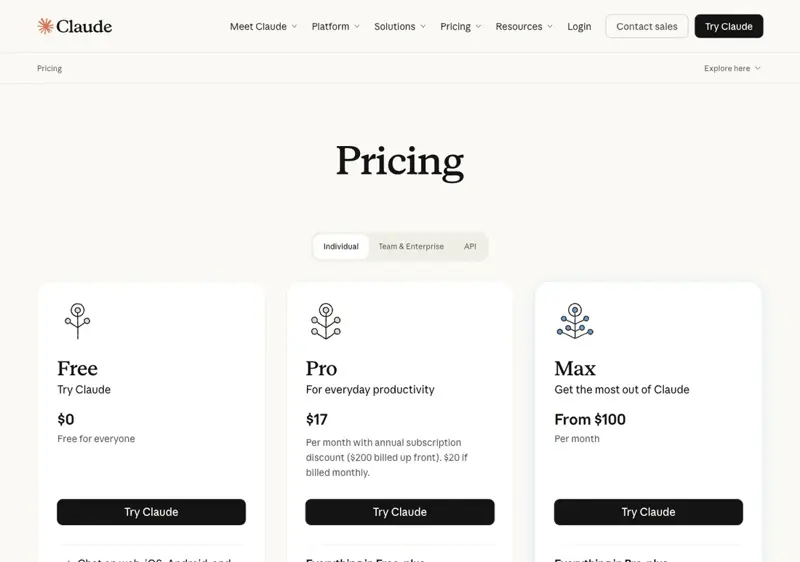
Anthropic Claude
- Free: around 15 messages before you’re done for a while.
- Pro/Max: a weekly usage limit across all models plus a 5-hour session limit, both visible in Settings. And on June 15, 2026, Anthropic moved automated/agent use onto a separate metered credit — though if you just chat with Claude, that doesn’t change anything for you.
The pattern across all three: casual users mostly stay under the cap. Power users hit walls constantly. That’s by design — the limits are tuned to catch the heaviest 5%.
Why this happened (the honest version)
Three forces, all pulling the same direction:
- Compute is expensive and the good models are hungry. The smarter and more “reasoning-heavy” a model gets, the more it costs to run each answer. Newer models can cost far more per request than the ones they replaced.
- Infrastructure isn’t free. GPUs, data centers, electricity. Heavy users can quietly consume more resources than their subscription price covers.
- Agents changed the math. One paying account can now spawn automated software that makes thousands of calls a day. Flat pricing can’t survive that, so companies fenced it off into metered billing.
Put those together and “unlimited at $20/month” was always going to end. It just ended quietly, in changelog footnotes, instead of with an announcement.
What this means for you
If you’re a casual user (a few questions here and there) — honestly, you’ll rarely notice. You’re not the person these caps are built to stop. Don’t pay for a tier you don’t need out of fear.
If you’re a daily heavy user (long work sessions, big documents, lots of back-and-forth) — you’re the one hitting walls. The fix usually isn’t “pay more.” It’s “spread the load”: use a lighter model for routine stuff, and keep a free second assistant around for overflow.
If you’re deciding whether to upgrade — upgrade when you’re regularly hitting the cap on work that matters, not because the free tier feels stingy. The jump from free to $20 is worth it for most people who use AI for real work. The jump to $200 is for a specific, heavy minority.
If you run a business on AI — the lesson is to match the tool to the task. Drafting and replying? The cheap tier is fine. Pushing huge documents through reasoning models all day? Budget for it, and know your limits before a deadline catches you mid-cap.
What this map can’t fix
- It won’t make the limits go away. This is the direction of the whole industry now — local models and multi-provider rotation are the workarounds, not a secret unlimited plan.
- The exact numbers will drift. Companies adjust caps quietly and constantly. Use these as a feel, not a contract — and check your own Settings page, which often shows your real usage.
- It can’t tell you which tool is “best.” They’re closer than the marketing suggests. The right one depends on what you do most, not who has the highest cap this month.
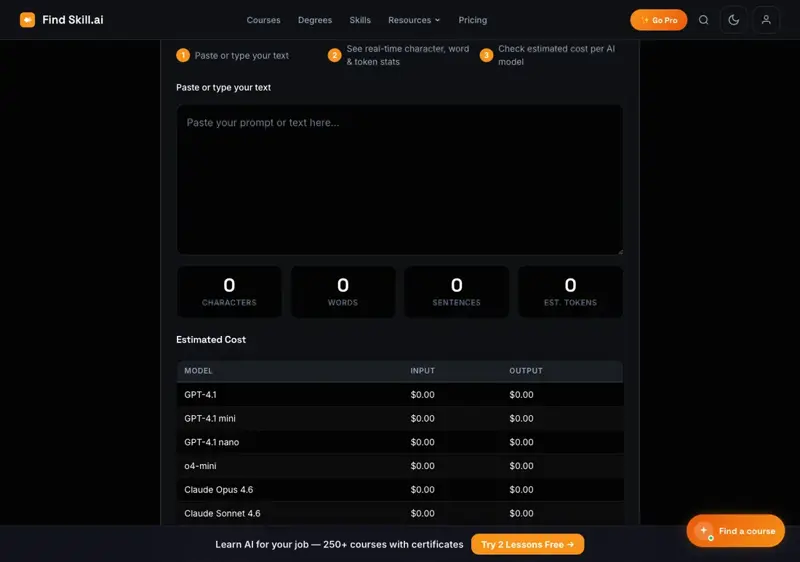
- It won’t count your tokens for you — but we built a free tool that does. If you want to actually see how much a long prompt “costs” against your limit, our AI Token Counter does the math for ChatGPT, Claude, Gemini, and more.
The bottom line
“Unlimited AI” was a brief, beautiful, financially impossible moment, and it’s over. In 2026, every plan has a ceiling — the trick is knowing roughly where yours is and working with it instead of slamming into it by surprise.
The good news: a little awareness goes a long way. Pick the right model for the task, keep a backup assistant, and upgrade only when the cap is actually blocking real work. If you keep running into the wall, here’s the practical companion to this piece: 7 Ways to Get More Out of Your AI Plan.
Want to actually get good at choosing and using these tools — instead of just managing their limits? Start with ChatGPT vs Claude or AI Fundamentals. First two lessons are free, no signup, 30 seconds in.
Sources
- LLM Usage Limits 2026: ChatGPT vs. Claude vs. Gemini — Explore AI Together
- ChatGPT vs Claude vs Gemini (June 2026): Plans, Limits, Models — Morphllm
- ChatGPT Usage Limits 2026: Free, Plus, Pro & Team — Zenken AI
- Free AI Tools 2026: ChatGPT vs Gemini vs Claude Limits — PEC
- Claude Usage Limit Explained 2026: Resets, Caps, Fixes — TokenKarma
