Somewhere this week, someone asked ChatGPT or Gemini to help them find a specific kind of gift — handmade, a certain price range, ships fast. The AI did its job well: it compared a handful of options, explained the trade-offs, and pointed them toward a listing. Then the person closed the chat, opened a new tab, and went to go actually buy it themselves. Maybe from the shop the AI recommended. Maybe from a different one they found along the way. The AI got them 90% of the way to a purchase and then, functionally, walked away.
That gap — AI does the research, a human does the buying, and a lot of sellers have no idea the AI was ever involved — is the real story in e-commerce right now, and it’s bigger and more specific than the “add AI to your product page” advice that’s been circulating for months. Here’s what the actual data shows, and what an Etsy or Shopify seller can do about it this week.
What’s Actually Happening: The Research-to-Purchase Gap
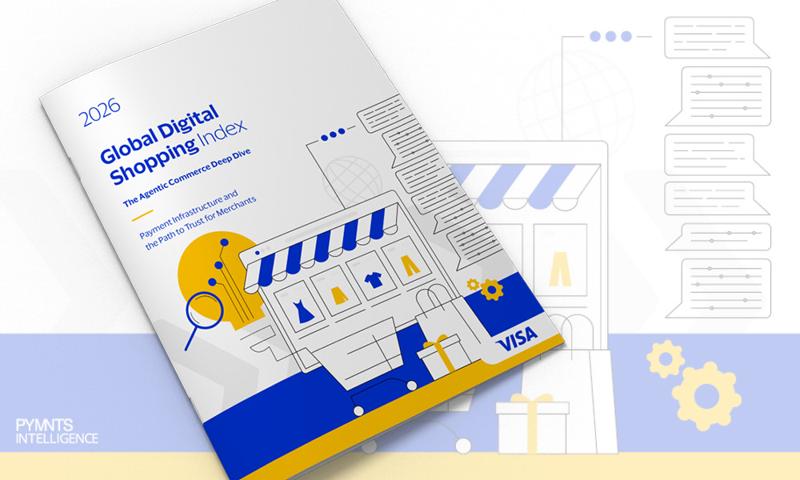
PYMNTS Intelligence, working with Visa Acceptance Solutions, surveyed thousands of consumers across the US, Brazil, and the UAE for its 2026 Global Digital Shopping research. The headline finding: 48% of online shoppers now use AI to research their most recent purchase. That’s not a fringe behavior anymore — it’s approaching half of all shoppers, for at least one recent purchase.
But here’s the number that matters more for anyone selling online: only 49% of those shoppers would let an AI agent actually complete the purchase for them. And among people who don’t already use AI tools regularly in daily life, that trust collapses to just 3%. People will let an AI compare products, search across merchants, and even manage loyalty programs — but when it comes time to hand over a payment method, most of them still want to be the one clicking “buy.”
A related PYMNTS survey of 2,299 US adults found 70% express interest in AI-powered shopping assistance generally, but only about 17% feel comfortable actually completing a purchase through an agent — and Bain & Company’s research adds a specific behavioral detail: 95% of consumers still perform at least one manual verification step before letting an agent finish a transaction. People are using AI as a very capable research assistant and refusing, almost universally, to hand it their wallet.
The Etsy Data Point That Confirms This Isn’t Theoretical
This isn’t just survey data — it shows up in real platform numbers. On its August 6, 2026 earnings call, Etsy told analysts that traffic arriving from AI-agent platforms is still under 1% of total site traffic — but that sliver of traffic converts at a higher rate and carries larger average order sizes than Etsy’s typical visitor. In other words: the AI-referred shopper who does complete a purchase is a better customer than average. The problem isn’t quality. It’s that most AI-assisted shoppers research on the AI, then buy somewhere the AI never sees — including, potentially, a completely different seller than the one it recommended.
Shopify’s own first-party data tells a version of the same story with different numbers attached. According to Shopify’s community and platform data (cited across multiple industry write-ups of the underlying figures), AI-referred orders on Shopify grew roughly 13x year-over-year in Q1 2026, while AI-chatbot referral sessions grew about 8x in the same period — meaning the orders are growing faster than the raw traffic, a sign that the shoppers who do arrive via AI convert unusually well once they’re actually on a well-structured product page. Separately, Shopify’s community has reported AI-referred shoppers converting at roughly 50% higher rates and carrying 14% higher average order values than shoppers arriving from organic search.
Adobe Analytics data adds one more confirming layer: AI-referred retail traffic now converts 42% better than non-AI traffic — a full reversal from converting 38% worse just a year earlier. Something changed in how AI-referred shoppers behave, or in how well merchants have adapted their sites for them, sometime in the past twelve months.
An Even Starker Way to See the Gap
A widely shared framing from a product-focused X account this week put it bluntly: AI is now involved in an estimated 62% of online shopping research, but only about 23% of the actual buying. That’s not an official PYMNTS or Adobe number — it’s a general estimate circulating in e-commerce/AI circles — but it captures the shape of the problem in a way the more precise survey numbers sometimes obscure: the research-to-purchase handoff is where AI-assisted shopping is currently breaking down, and it’s breaking down at scale.
Why This Is Happening: What the AI Can and Can’t See on Your Listing
When someone asks ChatGPT, Gemini, or Perplexity to help them shop, the AI is working from whatever it can reliably parse and quote back — clean product titles, specific attributes (size, material, color, price), and, where available, structured data markup that explicitly tells it what a product is. If your listing is a wall of decorative language and twelve unlabeled photo variations, the AI either skips you in favor of a competitor with cleaner data, or it recommends you inaccurately, which is arguably worse — a shopper who gets told something wrong about your product and then finds out on your actual page is a lost sale, not a confused one.
The handoff problem compounds this. Even when an AI does recommend your store accurately, the shopper who arrives is doing so with specific expectations set by the AI’s summary — expectations your actual page needs to confirm within seconds, or you lose them to the “let me just check somewhere else” instinct that drove that 51%-plus of people who researched with AI but wouldn’t let it buy.
The 30-Minute Audit and Fix
You don’t need a developer or an agency retainer to close a meaningful chunk of this gap. Here’s the walkthrough, in order.
Step 1: Run the self-test
Open ChatGPT, Gemini, or Perplexity and ask it to recommend a product in your exact niche — use the phrasing a real buyer would use, not your own marketing language. For example, if you sell handmade leather wallets on Etsy, try: “I need a handmade leather wallet, under $60, that ships within a week.”
Expected result: See whether you appear at all, and if you do, check whether what the AI says about your product is actually accurate. Note who does appear and what their listings have in common — usually it’s clean, specific product data.
Step 2: Rewrite your titles and attributes for how AI reads, not how humans skim
AI assistants quote structured, specific information far more reliably than evocative marketing copy. “Handcrafted Full-Grain Leather Bifold Wallet, Chestnut Brown, 4.5in x 3.5in” gives an AI something concrete to work with. “Beautiful Wallet You’ll Love Forever” doesn’t. This doesn’t mean abandoning personality in your copy — it means putting the concrete facts (material, size, color, price, shipping time) somewhere clean and parseable, typically your title and the first line of your description, before the storytelling starts.
Expected result: A more literal, fact-forward first sentence per listing. It reads slightly less “artisanal blog post” and slightly more “spec sheet” — that’s the point.
Step 3: Answer the questions AI assistants get asked about your category
Think about what a shopper would ask an AI before buying something like yours — “does this run small,” “is this dishwasher safe,” “how long does custom engraving take” — and put direct answers to those questions somewhere in your listing, ideally as a short FAQ block. AI assistants pull this kind of Q&A content specifically because it maps directly onto what shoppers are asking them.
Expected result: Fewer AI-referred visitors bouncing because a basic question wasn’t answered where the AI could see it or where they could quickly confirm it themselves.
Step 4: Cut the variation clutter that hides your buy button
If your listing has fifteen color/size/material variations crammed into one dropdown-heavy page, an AI-pre-sold shopper — who arrived expecting to buy something specific and fast — can get lost in the same decision paralysis that kills conversion for any visitor, AI-referred or not. Simplify where you can, or make the specific variation the AI would have recommended easy to find immediately.
Expected result: A shorter path from “I clicked through” to “I found the exact thing and bought it,” measured in seconds, not scrolls.
Step 5: Add the trust signals that convert a skeptical AI-researcher
Since we know from the PYMNTS data that most AI-assisted shoppers don’t trust the AI to close the purchase — meaning a human is making the final call — the things that reassure a human buyer still matter enormously: visible review counts, a clear returns policy, and transparent, non-surprising pricing (no shipping-cost reveal at checkout). An AI-referred visitor who arrives high-intent can still bounce at the last second if your page doesn’t answer “can I trust this seller” as fast as it answered “is this the right product.”
Expected result: A visitor who was already leaning toward buying — because an AI vetted you for them — completes the purchase instead of clicking away to “just double check” on a competitor.
A Worked Example: Before and After
Imagine you sell ceramic planters on Etsy. Here’s what a real before/after on Step 2 and Step 3 might look like.
Before: “Cozy Little Planter — Perfect For Your Favorite Plant Baby 🌿” — no dimensions in the title, material buried three paragraphs down, no mention of drainage.
After: “Handmade Ceramic Planter with Drainage Hole, 5-inch, Matte White — Fits Most Small Succulents & Herbs” — followed by a short FAQ: “Does it have a drainage hole? Yes, with a saucer included. Is it food-safe? N/A, decorative use only. Ships in how long? 2-3 business days.”
An AI assistant asked “find me a small ceramic planter with drainage for succulents” can now quote your listing accurately and specifically, instead of skipping it for a competitor whose title happens to include “drainage hole” verbatim, or recommending you inaccurately because it had to guess.
Comparison: What Each AI Shopping Behavior Actually Means for You
| Shopper behavior | Share of shoppers (PYMNTS/Bain data) | What it means for your listing | Your fix |
|---|---|---|---|
| Uses AI to compare products/prices across merchants | Majority will let AI do this | Your product needs to be findable and accurately describable by the AI in the first place | Clean titles, specific attributes, structured data |
| Uses AI to manage loyalty programs, surface deals | ~44-49% comfortable with this | Less directly actionable for a small seller — more relevant to larger loyalty programs | Lower priority for solo sellers |
| Lets AI complete the actual purchase | ~49% overall, ~17% in a separate survey, ~3% among non-regular AI users | Most AI-assisted traffic will still land as a human clicking through, not an autonomous agent checking out | Optimize the human-facing page just as much as the AI-facing data |
| Performs a manual verification step before trusting an agent’s purchase | 95% (Bain) | Trust signals (reviews, returns policy, transparent pricing) matter more, not less, for AI-referred visitors | Make trust signals visible immediately, not buried |
What This Means for You
If you’re a solo Etsy seller with under 50 listings: Start with your five best-selling items. Rewrite titles and add a 3-question FAQ to each this week — that’s a genuinely achievable first action, and it’s where AI-referral traffic is most likely to concentrate anyway.
If you run a Shopify store with a larger catalog: Prioritize structured data (schema markup) across your whole catalog before you hand-tune individual listings — it’s a bigger lever at scale, and it’s the same fix Shopify’s own GEO playbook recommends as the foundation.
If you’re already seeing a conversion-rate drop and blaming general market softness: Check whether AI/bot traffic is actually inflating your session counts before you conclude anything about human conversion. (See the bot-traffic edge case below — this is a real, documented issue right now, not a hypothetical.)
If you sell a highly customizable or made-to-order product: Your FAQ block matters more than most sellers’, because AI assistants specifically struggle to represent “it depends on what the customer wants” accurately. Spell out your customization options as explicitly as you can.
If you’re a 10-person team with a marketing person on staff: This is worth a half-day project, not a multi-week initiative. Assign someone to run the Step 1 self-test across your top 20 SKUs and triage from there — you’ll likely find a handful of listings doing most of the damage.
If you’ve never thought about AI shopping traffic at all: You’re not behind in a way that requires panic. The traffic share is still small — Etsy itself says under 1% — but it’s the highest-converting small slice of traffic on the platform, which makes it worth a few hours of attention even at today’s volume.
If you sell primarily through paid ads and treat organic/AI traffic as an afterthought: Reconsider that ranking. The data above suggests AI-referred traffic is converting better than your paid traffic in aggregate benchmarks — it may be the highest-ROI channel you’re currently ignoring.
Edge Cases and Troubleshooting
- “My conversion rate looks like it’s crashing, but I don’t understand why.” Before you panic, check whether bot/AI-crawler traffic is inflating your raw session counts without corresponding purchases. One Shopify merchant reported publicly that AI and bot traffic had gotten heavy enough on his store that he “had no idea what the conversion rate is anymore,” despite running Cloudflare bot-blocking rules. The fix: use Shopify’s human-vs-bot session filtering (or your analytics platform’s equivalent) rather than trusting raw session totals.
- A quick way to sanity-check bot inflation yourself: If more than roughly 15% of your sessions last under 2 seconds, that’s a commonly cited threshold suggesting bot/crawler traffic, not human browsing — worth investigating in your analytics tool’s session-duration breakdown.
- “I added structured data and nothing changed.” Structured data is necessary but not sufficient — it helps AI assistants parse your page accurately, but it doesn’t make them recommend you over a competitor with better reviews or a lower price. Treat it as table stakes, not a magic lever.
- “An AI recommended a competitor by name instead of me, even though my product is objectively better.” This usually traces back to the competitor having cleaner, more specific product data the AI could confidently quote — not to your product being worse. Re-run the Step 1 self-test on that exact competitor’s listing to see what they did differently.
- “I don’t want to sound like a spec sheet — I built my brand on personality.” You don’t have to choose. Put the parseable facts (size, material, price, shipping) in the first sentence or a clearly labeled FAQ, and keep your brand voice in the rest of the description. AI assistants and human shoppers can both get what they need from the same listing if it’s structured thoughtfully.
- “My variations are genuinely complex — I can’t simplify them without losing options customers want.” Consider a hybrid: keep the full variation set, but surface the single most popular or most AI-likely-recommended combination prominently, with the rest available but not required to parse first.
- “Should I try to block AI crawlers from indexing my store at all?” Blocking AI crawlers means you’re invisible to the growing share of shoppers who research with AI first — given that AI-referred traffic converts better than average across every dataset cited here, blocking it is very likely leaving money on the table, not protecting it.
- “Etsy/Shopify hasn’t given me any AI-specific analytics — how do I even know if this traffic exists on my store?” Check your referral-source reports for traffic from chat.openai.com, gemini.google.com, or perplexity.ai directly, and watch for unusual patterns in direct traffic with unusually high intent (short session, immediate add-to-cart) — that’s often AI-referred behavior showing up without a clean referrer tag.
What This Can’t Fix
- It can’t turn a genuinely uncompetitive product into a bestseller. AI-optimized listing data helps you get found and understood accurately — it doesn’t compensate for a product that’s priced wrong or simply isn’t what the market wants.
- It can’t guarantee AI assistants recommend you specifically. You’re optimizing your odds, not buying a guaranteed placement — there’s no paid AI-shopping-ads product from any major platform yet that reliably puts you ahead of a better-matched competitor.
- It won’t meaningfully move the needle if your traffic volume is very low. With under 1% of total e-commerce traffic currently AI-referred per Etsy’s own disclosure, a brand-new shop with minimal traffic overall won’t see a dramatic before/after from this alone — treat it as a compounding long-term investment, not a quick traffic fix.
- It can’t replace basic conversion-rate optimization fundamentals. Fast page load, clear photos, and an easy checkout still matter more in aggregate than AI-specific tuning — do the fundamentals first.
- It doesn’t solve trust from scratch. If you have zero reviews and no return policy, no amount of AI-readable product data changes the fact that most AI-referred shoppers still want a human-trust signal before buying, per the Bain 95%-manual-verification finding above.
FAQ
Do I need to change my whole store, or just a few listings? Start with your best sellers or highest-margin items — five to ten listings is a realistic first pass that takes under an hour.
Is this the same thing as “SEO for AI” or “GEO” I’ve been hearing about? It overlaps significantly. Generative Engine Optimization (GEO) is the broader term for making any content — not just product listings — legible to AI systems. This guide applies that specifically to e-commerce product pages.
Will ChatGPT or Gemini actually let me pay through the chat, or does the shopper always leave to buy? Both major platforms have piloted in-chat purchasing (OpenAI’s Instant Checkout, for example), but adoption is still early, and the PYMNTS data above shows most shoppers don’t yet trust an agent to complete the purchase even when the option exists. Plan for “AI refers, human buys on your site” as the dominant pattern for now.
Does structured data (schema markup) actually matter if I’m on Etsy, where I don’t control the underlying HTML? Etsy’s platform-level structured data is largely out of your hands, which makes your title, tags, and description text even more important — that’s the data you do control, and it’s what AI assistants parsing Etsy listings rely on most directly.
How do I know if an AI is even sending me traffic right now? Check referral sources in your analytics for chat.openai.com, gemini.google.com, claude.ai, and perplexity.ai. Given Etsy’s own reported sub-1% share, don’t expect a huge number — but check whether it’s trending up month over month.
Is bot traffic inflating my numbers, or is my conversion rate actually falling? Check the session-duration distribution in your analytics. A spike in sub-2-second sessions without a corresponding change in orders is the clearest sign of bot inflation rather than a genuine human conversion problem.
What’s the single highest-leverage thing I can do this week? Run the Step 1 self-test on your five best-selling items, then rewrite just the first sentence of each listing to lead with concrete, parseable facts. That’s genuinely a 30-45 minute project with the highest ratio of effort to potential impact.
Do I need any special tools or paid software for this? No. Everything in this guide is something you can do by editing your existing listings directly on Etsy or Shopify, using a free AI chat tool to run the self-test.
The Bottom Line
The uncomfortable truth in this data isn’t that AI is taking over shopping — it’s that AI is doing the hard part (research, comparison, narrowing down options) and then, almost universally, handing the actual purchase decision back to a human who still wants to double-check things themselves. That handoff moment is exactly where a small seller with a well-structured listing wins, and where a seller relying on evocative-but-vague copy loses a customer who was already sold before they even clicked through. You don’t need an agency or new software to close that gap — you need about thirty minutes and the willingness to write your five best listings a little more plainly than feels natural.
If you want a structured way to work through discoverability and listing optimization for AI-driven shopping specifically, our Sell on ChatGPT course walks through getting your products recommended by AI shopping assistants, and our AI for Etsy Sellers course covers the listing-audit-and-rewrite process in more depth than this guide has room for.
Sources
- PYMNTS — 48% of Online Shoppers Now Use AI Before Buying (Aug 2026)
- PYMNTS — AI Is Bringing Retailers Their Best Customers but Not Closing the Sale (Aug 2026)
- Yahoo Finance — Etsy’s Seller Tools Could Unlock Faster Marketplace Growth (Aug 6, 2026 analyst call)
- novadata — AI shoppers arrive ready to buy but rarely close the sale online (Aug 2026)
- Shopify — Agentic Commerce: Benefits & How To Get Started
- Elmo — AI Referral Traffic Conversion Rates: 2026 Data
- DigitalApplied — AI Shoppers Now Convert 42% Better Than Google Traffic
- AgentPMT — The AI Checkout Wars Are Here. Consumer Trust Isn’t.
- Morningstar (CI&T research) — AI Agents Now Used by the Majority of Consumers to Make Shopping Decisions
- Business.Adobe — Q2 2025 insights: AI referrals surge across industries
- Community.Shopify.com — Tracking AI referral traffic and reporting (AMA thread)
