Ask a medic in a busy system what happens after a 24-hour shift and you’ll hear the same number: three, four, sometimes five more hours of charting before they’re allowed to go be a person again. The narrative is the slowest part — and for new EMTs it’s the part nobody really taught. You learned airways and extrication; then someone handed you a blank box and said “paint a picture, and remember it’s a legal document.”
ChatGPT can genuinely make you better at that box. But EMS is the one profession where using it wrong isn’t embarrassing — it’s a HIPAA breach, and at some agencies it’s a firing offense. So this is the workflow that gets the benefit with none of the exposure: a practice system built on fictional patients, with two hard gates up front.
The two gates (read these before any prompt)
Gate one: your agency’s policy outranks this article. AI policies have landed in EMS fast and they’re all over the map. Some departments now run embedded AI narrative tools inside their ePCR platforms. Others restrict charting to company devices where chatbots are blocked. And some have made it brutally simple — get caught using AI on a narrative in any capacity, and you’re done. Before you use AI for anything that touches real work product, find out which kind of shop you work for. Ask your supervisor or QA officer directly; “I didn’t know” isn’t a defense anywhere.
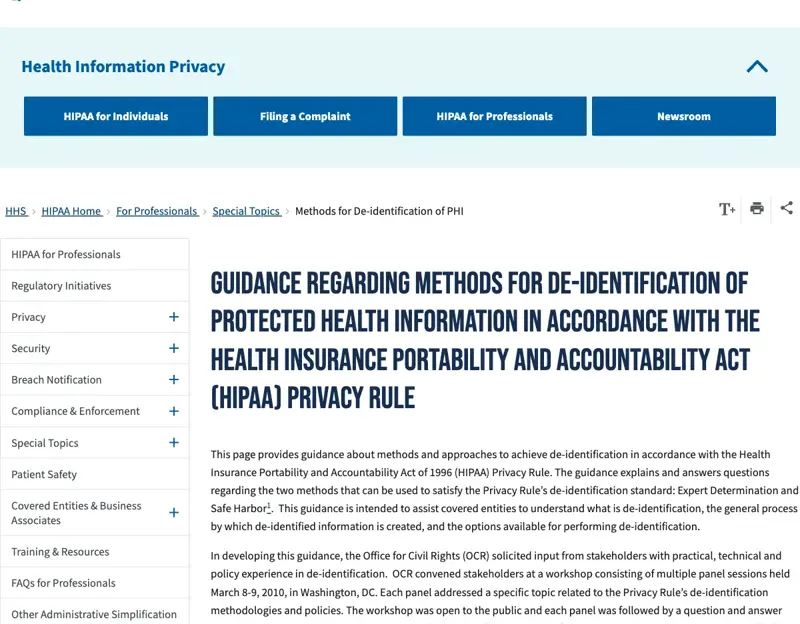
Gate two: no patient data in a public chatbot. None. Ever. Free ChatGPT is not HIPAA-compliant — there’s no business associate agreement covering your consumer account, so anything identifiable you paste is an unauthorized disclosure. And “identifiable” is broader than names: HIPAA’s Safe Harbor standard lists 18 categories, including dates, locations smaller than a state, ages over 89, and “any other unique identifying characteristic.” On a memorable call — the rollover on the named highway, the unusual mechanism — the story itself can identify the patient with every formal identifier stripped. Which is why the workflow below doesn’t de-identify real calls. It uses calls that never happened.
Why narratives are worth deliberate practice
Because the narrative is where charts die. Ask any QA officer what bounces reports and it’s the same list: vague descriptions that fail the “could a stranger visualize this scene?” test, missing pertinent negatives, narratives that contradict the vitals or interventions recorded two tabs over, and template boilerplate that obviously wasn’t written about this patient.
And the stakes outlive the shift. “If it wasn’t documented, it didn’t happen” isn’t a poster slogan — PCRs are business records that get subpoenaed in lawsuits and criminal cases, and they’re the evidence Medicare uses to decide whether your transport gets paid. Studies of EMS handoffs have found significant gaps between what crews said at the bedside and what made it into the final PCR — exactly the kind of inconsistency that turns into a bad afternoon in a deposition years later.
Writing tight narratives is a skill. Skills respond to reps. The problem is nobody gives you reps — you get live calls, real consequences, and whatever feedback QA has time for. That’s the gap ChatGPT fills.
The practice workflow: fictional reps, real skill
This takes about 20 minutes a session, costs nothing, and never touches PHI because every patient in it is invented.
Step 1 — Generate a scenario (fictional, always).
“You’re an EMS scenario generator. Create a realistic dispatch scenario for narrative practice: include dispatch info, scene description, a fictional patient (invented name, age, complaint), assessment findings, and interventions. Make it a [medical/trauma] call of [easy/moderate/messy] complexity. Entirely fictional — invented names, dates, and town.”
You’ll get a call sheet like a skills-station card. Messy is good — the 2am call with the unhelpful bystander and the meds list in a grocery bag is where narrative skill actually lives.
Step 2 — Write your narrative first. By hand. In whatever format your service requires — D-CHART is common, SOAP and CHART variants are everywhere, and your agency’s preference wins. No AI in this step; the rep only counts if you do the lifting.
Step 3 — Make ChatGPT your QA reviewer.
“Act as a strict EMS QA reviewer. Here’s a narrative I wrote for the fictional scenario above. Flag: vague language that fails the visualization test, missing pertinent negatives, internal inconsistencies, legally risky phrasing (conclusions instead of observations), and anything a billing reviewer would question. Be specific and blunt, then show a revised version.”
This is the move that makes the whole thing work. You’re not asking AI to write your chart — you’re getting instant, unlimited, judgment-free QA on charts about people who don’t exist. The feedback loop that takes weeks through a real QA process takes ninety seconds here.
Step 4 — Study the delta, steal the structure. Compare its revision against yours. You’ll see the same three or four of your own habits flagged every session — that’s your actual curriculum. Most providers find their narratives stop bouncing within a few weeks of this kind of deliberate practice.
One adjacent trick that isn’t AI at all: seasoned medics keep a boilerplate document — clean, reusable phrasings for refusals, restraint documentation, lift assists — and adapt per call. Build yours from your practice revisions, and you’ve turned the drills into a permanent toolkit.
What this means for you
If you’re a new EMT drowning in your first PCRs: run the four-step drill twice a week. Your narratives are the first thing QA, lawyers, and medical directors ever learn about you — getting good early is a career move, and this is the only way to get reps without consequences.
If you’re a medic who precepts: generate scenarios for your students and let the AI handle first-pass narrative critique while you teach the clinical judgment. One agency trick that works: have trainees write the narrative, run the QA prompt together, and discuss what the review got right and wrong — that last part teaches them the tool’s limits at the same time.
If you’re the QA officer: this is your ally, not your replacement — providers who practice bounce fewer charts. But it’s also your cue to push for a written AI policy if your agency lacks one, because your providers are already experimenting, and right now they’re doing it without rules.
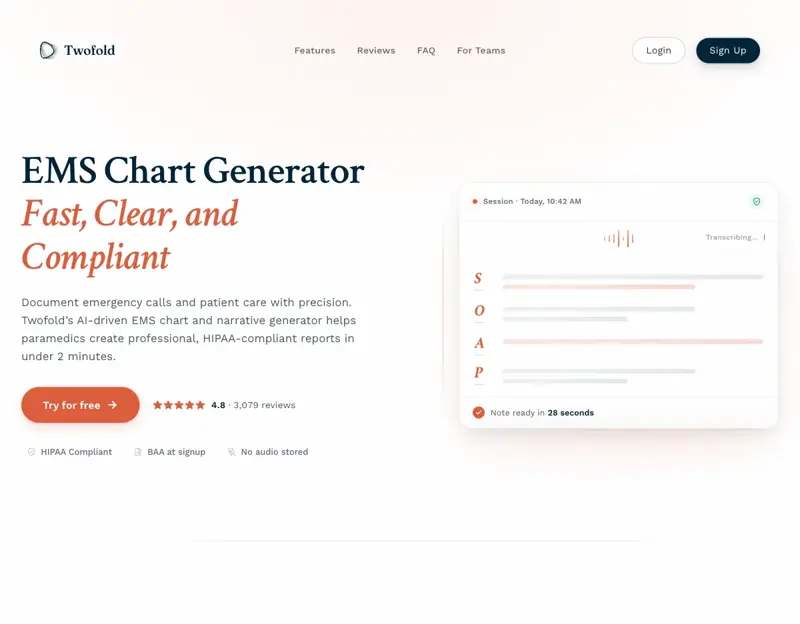
If your agency runs an embedded ePCR scribe (ESO-style auto-narratives, voice tools): those are sanctioned and covered by agreements — different lane entirely. One non-negotiable habit carries over: proofread every generated word. Auto-drafted narratives have shipped with the wrong working impression on them, and your signature makes it yours.
If you’re studying for the NREMT: the same scenario-generator pattern works for protocol and pharmacology drills — “quiz me with five scenario questions about this med, then explain what I got wrong in plain English.” Verify every clinical claim against your current protocols; the AI is a study partner, not a reference.
What this workflow can’t do
- Write your live PCR. Policy risk, PHI risk, and liability — the signature on the chart is yours, and “the AI wrote it” defends nothing.
- Know your protocols. ChatGPT’s medical knowledge is internet-average and sometimes confidently wrong. Practice structure with it; never clinical content.
- Match your agency’s exact format quirks. It knows D-CHART generically; your service’s required phrasings come from your FTO, not the model.
- Fix a charting backlog. Skill reduces the time each narrative takes; it doesn’t make six held charts after a brutal shift acceptable to anyone’s QA.
- Make the privacy question go away. Even with fictional practice, keep the reflex sharp: the day you’re tired and tempted to paste something real is the day the two gates earn their keep.
The bottom line
The safest, highest-value way for an EMT to use ChatGPT in 2026 isn’t on a real chart at all — it’s as an infinite scenario generator and a tireless QA reviewer for charts about people who were never born. You get the reps, the feedback, and the boilerplate library; the patients get exactly zero exposure; and your agency’s policy stays unbroken because nothing real ever left your head.
If you want the structured version — safe prompts, privacy rules, and the documentation drills built out for healthcare shift work — our AI for Healthcare Workers course starts free and assumes zero tech background.
Sources
- Guidance Regarding Methods for De-identification of PHI — HHS.gov
- AI in EMS documentation: Benefits, risks & the future — EMS1
- Best AI Scribe for EMS, Firefighters & Paramedics — Twofold
- AI Tools for EMTs and Paramedics in 2026 — Qualora
- Privacy and security concerns with AI chat tools in healthcare — Journal of Law, Medicine & Ethics (2023)
- Information loss in emergency medical services handover of trauma patients — Prehospital Emergency Care
- EMTs and Paramedics — U.S. Bureau of Labor Statistics
