Google dropped Gemini Omni Flash on May 19, the opening day of I/O 2026. Two days later, the top question on Google’s “people also ask” for the launch isn’t “what is it” — it’s “is it free?”
The honest answer: yes, partly. There are four legitimate ways to use Omni Flash without paying for a subscription, and a few traps (mostly third-party reseller sites charging for what Google is giving away). This post maps every free path that’s live right now.
What Omni Flash actually is
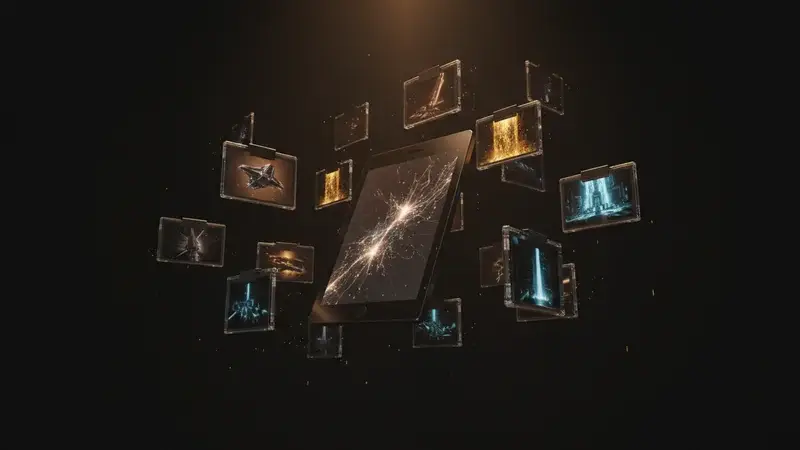
Omni Flash is the first member of Google DeepMind’s new Omni model family. Unlike Veo 3, which mostly went text-to-video, Omni Flash takes any combination of text, images, audio, and existing video as input, then generates a 10-second clip with synchronized audio that reasons across all the inputs at once. You can hand it a reference image of a character, an audio file of dialogue, and a clip showing the lighting you want — and get back one video that resolves all three constraints in the same scene.
The launch added a conversational editor on top of that: every follow-up instruction (“warm up the lighting”, “make her glance left”, “remove the background person”) builds on the last, holding character and scene consistency between turns. Every clip carries Google’s invisible SynthID watermark, embedded at the pixel level. The watermark survives re-encoding, cropping, frame-rate changes, and most filters — you can verify any clip by uploading it to the Gemini app and asking “Was this created with Google AI?”

The four free paths, ranked by usefulness
1. YouTube Shorts (rolling out this week — no account upgrade needed)
This is the most-promised free path and the one most people will actually use. Google’s official launch post says Omni Flash is “rolling out at no cost to users on YouTube Shorts and YouTube Create App starting this week.”
What that means in practice:
- Where: the Shorts editor inside the YouTube mobile app and YouTube Create. Look for a “Generate” or “AI clip” button next to the camera roll picker.
- Who: all YouTube users in supported regions — no Premium, no AI Plus, no Ultra. Standard YouTube terms apply.
- What you get: the ability to generate or remix a 10-second clip and drop it straight into a Short. The watermark stays on the video automatically.
- What you don’t get: the conversational editor (yet — that’s still Gemini-app-only at launch), and the ability to feed in your own reference audio or video files as separately weighted inputs.
A note on timing: as of May 21, the Shorts rollout had not finished. If you don’t see the option in your editor, it’s region- or A/B-test-gated. Open the app, force-close, reopen — and if that doesn’t surface it, try again in a few days.
2. YouTube Create app (free, mobile-only)
YouTube Create is Google’s free standalone video editor for phones. Anyone with a Google account can install it from the Play Store or App Store and use the Omni Flash generation features the same way YouTube Shorts does — same model, same watermark, same 10-second cap. The advantage over Shorts: you keep the raw rendered file instead of having it locked inside the Shorts feed.
3. Google Workspace via Flow (free if your employer already pays for it)
This one catches a lot of people by surprise. Google Flow, the AI filmmaking surface where Omni Flash lives in its richest form, is included with Google Workspace plans at no extra charge — including Business Starter, Business Standard, Business Plus, the Enterprise tiers, Education Standard, and Education Plus. Workspace users get 100 monthly Flow credits, refreshed each month.
If you work somewhere with Google Workspace already deployed (most schools, a lot of small businesses, a meaningful chunk of corporate IT), the cost to you is zero. You go to flow.google, sign in with your work account, and start generating. The 100-credit budget is enough for several short videos a month if you’re not iterating heavily.
You’ll need to be 18 or older and in a supported region. Workspace admins can also disable it tenant-wide, so check that it’s enabled before you spend an afternoon planning a project around it.

4. Gemini app on the free tier (very limited, but real)
If none of the above apply to you, the free version of the Gemini app at gemini.google.com still surfaces Omni Flash in a heavily rate-limited form. You won’t get the full conversational editor or the avatar mode, but you can try a generation or two per day to see what the model does before deciding whether to pay.
What you don’t get on the free Gemini tier:
- Reliable access (it’s quota-throttled and sometimes shows “try again later”)
- The richer conversational-editing surface (that’s behind AI Plus or higher)
- Avatar generation
- Multiple reference inputs
This is the “kick the tires once or twice” path, not the “I want to make a real video this week” path.
When you actually need to pay
If your plan is “I’ll generate dozens of clips a month and use them for client work,” none of the four free paths will be enough. Here’s what each paid Google AI tier actually unlocks for Omni Flash specifically:
| Plan | Price | What you get for Omni Flash |
|---|---|---|
| AI Plus | $7.99/mo | Standard Omni Flash access in Gemini app and Google Flow, conversational editor, modest generation quota |
| AI Pro | $19.99/mo | Same as Plus, with higher generation quota and priority during peak demand |
| AI Ultra | $99.99/mo | 5× the Gemini-app and Antigravity usage limits of Pro, plus Project Genie access |
| AI Ultra Premium | $200/mo | 20× the limits, all Ultra perks, plus Gemini Spark when it ships |
Two things to know before you upgrade: Google dropped the price of the top-tier plan at I/O (it used to be $250/mo — now Ultra Premium is $200), and Google changed how usage is metered. There’s no longer a hard daily cap — your quota refreshes every five hours until you hit a weekly ceiling. That’s better for short bursts of work and worse for marathon sessions.
Google has not published exact per-clip costs or resolution caps per tier. If you want to know the precise number of Omni clips you’ll get on AI Plus before you upgrade, the honest answer is: nobody outside Google can tell you with confidence yet, and the quota is dynamic anyway.
What Omni Flash can’t do (yet)
Five honest limits, because the launch coverage glossed over most of these:
- 10 seconds is the cap. Google says this is “a deployment decision, not a model constraint” — meaning they could lift it but haven’t. If you want a longer scene, you have to use Flow’s scene builder to stitch generations together frame by frame, which is workable but adds editing time.
- AI avatar mode requires a consent recording. To create a digital avatar of yourself, you have to record your own voice reading numbers aloud as an onboarding step. You can’t generate an avatar from a stranger’s clip or a celebrity photo. This is the consent gate that kept the demo from going viral as a deepfake tool.
- General-purpose audio and speech editing is held back. You can generate a clip with audio, but you can’t yet take an arbitrary audio file and edit the speech inside it. Google said they’re “still working to test this and better understand how we can bring this capability to users responsibly” — meaning probably not soon.
- The free Shorts path doesn’t expose the conversational editor. That’s an AI-Plus-and-up feature. On YouTube Shorts you get one-shot generations, not the iterative refinement that makes Omni Flash genuinely powerful.
- Region and rollout gates are real. Even if you have an eligible account, the feature may not show up immediately. Google is rolling Shorts integration gradually, and Flow has a regional supported-countries list. If you don’t see it, you’re probably not doing anything wrong.
What this means for you
If you’re a YouTube creator with no AI subscription: Stick with the YouTube Shorts integration as soon as it shows up in your editor. One-shot generations are enough for B-roll, reaction inserts, and “what if” cutaways. You won’t outgrow it for casual content.
If you’re a marketer or social media manager at a Workspace company: Go straight to Flow. The 100 monthly credits are likely already paid for by your IT department. Use them on storyboards, concept tests, and pitch decks before you propose a real video budget for production.
If you’re a solo creator considering paying: AI Plus at $7.99/mo is the right entry point. Skip Pro until you actually hit Plus’s quota. Skip Ultra unless you’re also using Antigravity for development work — that’s where the 5× usage multiplier earns its keep.
If you’re a teacher or educator: Workspace Education plans include Flow. Check with your IT admin before assuming it’s disabled — most schools left it on. This is the cheapest way to add AI video to lesson plans.
If you’re a small business owner without Workspace: YouTube Shorts is your free path. If you find yourself wanting more than one or two clips a week, AI Plus is the upgrade — Pro and Ultra are overkill for the volume most small businesses actually use.
The bottom line
Omni Flash is genuinely free if you’ll work inside YouTube Shorts or YouTube Create, and it’s effectively free if your job already runs on Google Workspace. The Gemini app and Flow on AI Plus give you the full conversational editor for $7.99/mo, which is the cheapest legitimate AI video subscription on the market right now. Everything above AI Plus is paying for volume, not for the model itself — the underlying Omni Flash is the same model whether you’re on the free Shorts path or the $200 Ultra Premium plan.
The traps to avoid: third-party sites charging $10-30/month for “Omni Flash access” that’s actually proxying through Google’s free tier with rate limits, and the persistent rumor that there’s a “secret” higher-quality Omni Pro tier — there isn’t, at least not one Google has announced.
If you want a structured way to learn AI video generation across multiple models (Omni, Sora, Veo, Runway, Kling), our AI Video Creation course walks through prompt patterns, comparison shoots, and the workflow shifts that make AI video actually usable for client work. Two free lessons, then Pro.
Sources
- Google Keyword blog: Everything new in Google AI subscriptions from I/O 2026
- TechCrunch: Google’s Gemini Omni turns images, audio and text into video
- The Next Web: Google launches Gemini Omni Flash with avatar mode held back
- Knightli: How to Use Gemini 3.5 Flash and Gemini Omni for Free
- Fellow AI: Gemini Pricing 2026 — Plans, API & Workspace Cost Guide
- Google Workspace Updates: Flow availability
- Tech Startups: Google launches Gemini 3.5 Flash and Omni world model at I/O 2026
- Mashable: Gemini Omni Flash avatar mode launch details
- Official @Google launch tweet (May 19, 2026): x.com/Google/status/2056789307856462061