A no-show isn’t one empty hour. When you do five to eight sessions a day, a single missed appointment can wipe out 12 to 20 percent of what you were going to earn — and you usually find out when they don’t walk through the door. Across the industry, massage practices run around 15–18% no-shows without reminders. With good reminder and follow-up texts, that drops to 2–3%. One model put the cost of unmanaged no-shows at roughly $7,300 a year for a typical solo therapist.
Most of that gap is closed by messages you don’t have time to write. Rebooking nudges. No-show recovery. The “I’ve got a Thursday opening” text. You know you should send them. You’re booked solid or wiped out, so you don’t.
This is the one part of your practice ChatGPT is genuinely built for — the front desk. Not your notes. Not your hands-on work. The texts. Here are seven you can set up once and reuse forever, plus the one privacy rule you cannot break.
First, the rule: never the client’s health, ever
Let’s get this out of the way because it matters more than any template below.
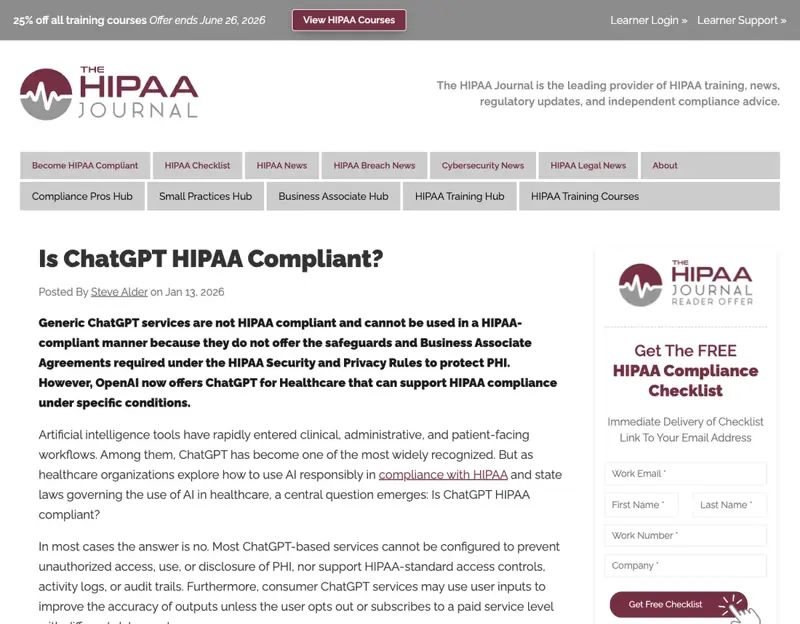
Standard ChatGPT — Free, Plus, even Business — is not HIPAA-compliant. OpenAI only supports HIPAA-covered use through specific enterprise/healthcare setups under a signed agreement, and that’s not what you’re on. So the line is simple: never paste a client’s name, contact info, conditions, injuries, or anything from a session into ChatGPT.
That’s not a real limit for what we’re doing, because front-desk marketing doesn’t need any of it. You’re writing templates — “Hi [Name], it’s been a few weeks…” — and your booking software fills in the blanks and sends them. ChatGPT is the copywriter; your scheduling tool is the one that actually knows who’s who.
If you want AI anywhere near actual session notes, that’s a completely different question with a different answer — we covered it in why ChatGPT isn’t HIPAA-compliant for notes. For everything below, you’re safe, because there’s no client information involved. As the ABMP (the big professional body) puts it, AI here is “a tool to assist,” not a writer you hand the wheel to.
The master prompt
Set this up once. It teaches ChatGPT your voice so every text sounds like you, not a corporate robot:
You're helping me, a solo massage therapist, write short client texts.
My voice is warm, calm, and professional — never salesy or pushy. Texts
must be under 50 words, easy to read on a phone, and use [Name] as a
placeholder (I never share real client info). For each one I describe,
write 2 versions I can choose from.
Then ask for any of these seven.
1. The post-session rebook
The single highest-return text. A brief check-in 24–48 hours after a visit reliably brings people back.
Ask: “A thank-you + gentle rebooking text to send 1–2 days after a session — check how they’re feeling and invite them to book their next visit.”
![ChatGPT drafting two warm, low-pressure rebooking texts using a [Name] placeholder — no client details required.](/.netlify/images?url=/images/blog/massage-therapist-rebooking-texts-chatgpt/chatgpt-rebooking-demo.webp&w=800&q=75)
2. The no-show recovery
No guilt, no fee-shaming — just an open door. This is the one that recovers revenue.
Ask: “A kind text for a client who missed their appointment — no judgment, briefly note the cancellation policy, and make it easy to rebook.”
3. The gentle reschedule
For when you have to move them, or they cancel last-minute.
Ask: “A warm text to reschedule a client, offering two specific time options.”
4. The fill-the-gap opening
You had a cancellation and a hole at 2 p.m. tomorrow. Send this to your waitlist.
Ask: “A short, low-pressure text announcing a last-minute opening tomorrow afternoon, first to reply gets it.”
5. The package nudge
Turn a one-timer into a regular without sounding like a timeshare pitch.
Ask: “A friendly text introducing my 5-session package and what it saves, for clients who’ve come in 2-3 times.”
6. The win-back
For the regular who quietly disappeared three months ago.
Ask: “A warm ‘we’ve missed you’ text for a client I haven’t seen in a few months, with a simple invitation to come back.”
7. The review reply
AI assistants and new clients both read your reviews. A thoughtful reply to a real one signals an attentive practice.
Ask: “A warm, specific reply to this Google review, under 40 words, sounding like a real solo therapist.” [paste the real review text only — no client identifying details]
What this means for you
If you’re a solo LMT: This is how you compete with the franchise down the street that has a front desk and a marketing budget. You don’t need either — you need these seven texts saved and a booking tool that sends them. Set it up on a slow afternoon.
If you’re mobile or rent a room: You are the front desk, between clients, in the car. Save these prompts on your phone. Rebooking is the difference between a full week and a patchy one, and it’s almost entirely down to whether the follow-up text gets sent.
If you’ve been afraid AI would make you sound fake: Good instinct — that’s the real risk (more below). The fix is the master prompt and your own edit. Used right, this gives you more time for the warm, present, human part, not less.
If your schedule has holes you can’t explain: It’s probably not your work — therapists with happy clients still bleed bookings through weak follow-up. Plug that leak first. It’s the cheapest growth you’ll find.
What this can’t do
- It can’t touch client health info — that’s the hard line. Templates only. Your booking system holds the names; ChatGPT never does.
- It can’t sound like you on its own. The number-one complaint clients have about AI messages is that they feel robotic, and in a trust-based, hands-on field that’s poison. Always run the master prompt and always edit the draft. “This felt impersonal” is the failure mode here.
- It can’t fix a bad experience. A perfect rebooking text won’t bring back someone who didn’t love the session. The texts amplify good work; they don’t paper over a problem on the table.
- It can’t book anyone. ChatGPT writes the words. Your scheduler, your SMS tool, or you have to actually send them and take the booking.
- It can’t give you legal or medical cover. It’s not a compliance tool. For anything touching health records, follow your state board and HIPAA — not a chatbot’s summary.
The bottom line
Your hands aren’t the bottleneck. The unsent follow-up is. Most of the schedule you’re missing comes down to texts you didn’t have time to write — and that’s the one job AI does well and safely, as long as you keep client information out of it.
Set up the master prompt, save the seven, and let your booking tool do the sending. Keep the warmth for the room. You’ll fill more of next week without working a minute more.
Want the full system? Our Claude for Small Business course and ChatGPT for Business walk solo practitioners through client communication, rebooking, and reviews — the whole front desk, step by step.
Sources
- 50 Massage Therapy Statistics (2026): Booking, Revenue & Trends — SchedulingKit
- 10 Massage Client Retention Strategies to Maximize Rebookings — Schedulicity
- Appointment Text Templates for Massage Therapists — GoReminders
- Is ChatGPT HIPAA Compliant? Updated for 2026 — HIPAA Journal
- ABMP — guidance on AI in massage practice
