
You got home at 8pm after a full day of calls, and now you’re sitting at the kitchen table with your phone, trying to remember the exact wording you used on the last quote so this one sounds consistent. Somewhere in your notifications is a customer asking if you’re still coming tomorrow, a Google review you haven’t replied to, and a text you need to send saying you’re running twenty minutes behind on the next job. This is the part of the trade nobody puts in the recruiting brochure — and it’s the part AI can actually help with tonight, for free, without you buying anything or learning new software.
Search “AI for electricians” or “AI for plumbers” right now and you’ll land on one of two things: a $50-to-$800-a-month AI receptionist pitch, or a think-piece arguing about whether robots are coming for your trade. Nobody’s just handed you the free copy-paste version. That’s this post.
What’s Actually Going On Right Now
Two things are happening at once in the trades, and they’re pulling in opposite directions.
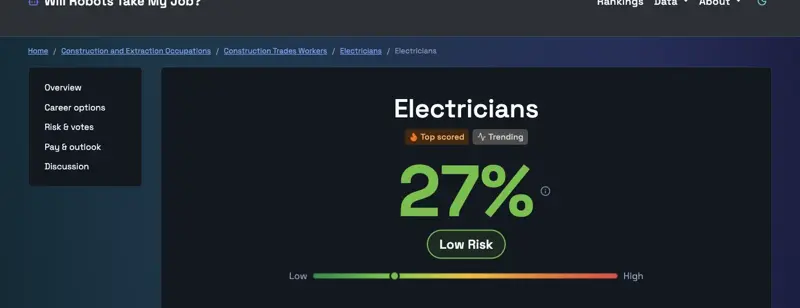
First, there’s real anxiety. Searches for “will AI replace electricians” and “will AI replace plumbers” are both rising — roughly 4x and 2.5x year-over-year respectively, according to AI-search tracking data — and the tone in the trade community is defensive. On X, the reaction to any “AI is coming for your job” post is swift and pointed: “They will not replace tradesmen. If you spent a year on site or in a workshop you would understand why. People that can barely plug in a home theatre system telling electricians they will be out of work because robots is peak crazy,” one electrician wrote in early September. Automation-risk research backs that instinct up: a 2026 analysis of 55+ manual professions puts electricians at roughly 15% automation risk and plumbers at roughly 8% — among the lowest of any occupation tracked, and nowhere close to the 74%+ exposure researchers assign to desk jobs like paralegal work or entry-level coding.
Second — and this is the part the fear headlines miss — a growing number of tradespeople are already quietly using AI for the parts of the job that have nothing to do with pulling wire or sweating a joint. A 2026 ServiceTitan survey of over 1,000 contractors found only 12% have AI “embedded” into daily operations and 35% report zero use — but a separate Bourne AI survey found 33% are already using ChatGPT, Gemini, or Claude informally on the job, mostly for exactly the admin tasks this post is about. One plumber summed up the split well on X in early September: “I’ve used Chat GPT to help me diagnose and fix very difficult plumbing or maintenance issues. I also take pics of a specific model of appliance or fixture and use this info to dig deep on model specific problems, solutions, and new parts that need to be ordered.”
So the honest version of this story isn’t “AI is coming for your trade” or “AI changes nothing.” It’s: the physical work is safe, the paperwork isn’t required to eat your evening anymore, and right now most of the AI attention in this space is going to $500-a-month SaaS tools solving a problem free ChatGPT already solves.
The Five Free Prompts
These are built for a solo electrician or plumber, or a small crew — no new software, no signup, just ChatGPT (the free version works fine for all five). Copy the bracketed template, swap in your real details, and paste it in.
1. The Quote Explanation
Customers say yes to quotes they understand. This prompt turns a bare number into a clear explanation of what they’re paying for.
I'm a [electrician/plumber]. I quoted a customer $[amount] for [job description —
e.g., "replacing a 100-amp panel with a 200-amp panel" or "repairing a slab leak
under the kitchen"]. Write a short, friendly text or email explaining what's
included in that price and why it costs what it does, in plain language a
homeowner would understand. Keep it under 120 words. Don't use technical jargon
without explaining it in one short phrase.
2. The “Running Late” Text
The goal isn’t just an apology — it’s stopping the anxious follow-up call.
I'm running about [X] minutes late to a [plumbing/electrical] appointment.
Write a short text to the customer that gives a new arrival time, briefly
explains why (traffic / previous job ran long — pick one), and reassures them
I'll text again when I'm 10 minutes out. Keep it under 40 words, friendly but
professional.
3. The Google Review Reply (Especially the 1-Star Ones)
Future customers read your review replies more than they read the reviews themselves. A calm, specific reply to a bad review often does more for bookings than ten 5-star replies.
A customer left this review of my [electrical/plumbing] business: "[paste the
review text]." Write a professional, calm reply that doesn't sound defensive,
acknowledges their specific concern, and briefly states what I'd do to make it
right or clarifies any factual inaccuracy — without arguing publicly. Keep it
under 80 words.
4. The Estimate Follow-Up (After No Response)
The gap between “sent a quote” and “got the job” is often just a follow-up nobody sent.
I sent a quote to a customer [X] days ago for [job description, price] and
haven't heard back. Write a friendly, low-pressure follow-up email that checks
in, briefly restates the value of the work, and makes it easy for them to say
yes or ask a question — without sounding pushy or desperate. Keep it under 100
words.
5. The Plain-English Invoice Breakdown
For bigger jobs where the customer is going to look at the invoice line-by-line and wonder what half of it means.
Here are the line items on an invoice for a [electrical/plumbing] job: [paste
line items and amounts]. Rewrite this as a short, plain-English summary a
homeowner could read in 30 seconds that explains what each major cost covers,
without changing any of the numbers. Keep technical terms to a minimum, and
explain any you have to use.
One habit that makes all five better: paste in two or three of your own past quotes or texts first and say “match this tone and style” before you ask for the new one. ChatGPT will pick up your actual voice — how formal you are, whether you use exclamation points, how you sign off — instead of defaulting to generic customer-service language that doesn’t sound like you.
Free ChatGPT vs. the $500/Month AI Receptionist: What You Actually Need
The AI-for-trades market right now is dominated by receptionist tools that answer your phone, book appointments, and text customers automatically. They’re not scams — they solve a real problem (missed calls cost a one-truck operation real money) — but they’re not the same tool as what this post is about, and most solo operators don’t need both.
| Free ChatGPT | AI Receptionist SaaS (Sophiie, Upfirst, QuoteIQ, etc.) | |
|---|---|---|
| Cost | $0 | $25–$820/month depending on tool and call volume |
| What it does | Drafts text/email/review replies you still send yourself | Answers your phone live, books jobs, sends automated texts |
| Setup time | None — open ChatGPT and paste a prompt | Hours to days — connects to your calendar, CRM, phone line |
| Best for | Anyone drafting their own quotes, texts, and replies | Businesses missing enough calls that a lost job costs more than the subscription |
| Biggest risk | You still have to remember to use it | Complex customer questions can get mishandled by the automated flow |
| Who actually needs it | Every solo operator, immediately | Multi-truck operations losing real, countable revenue to missed calls |
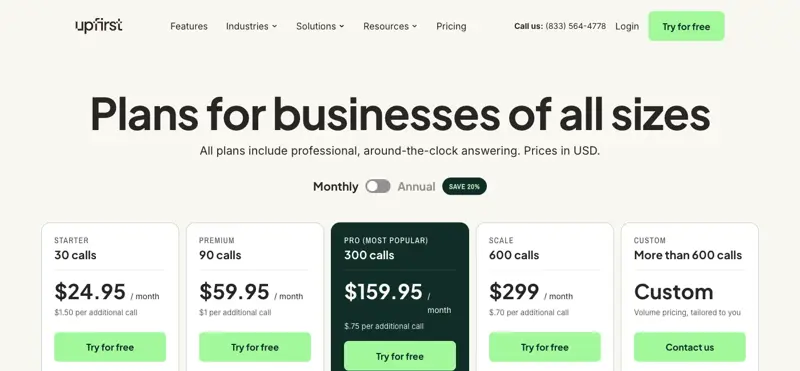
The honest read: if you’re a one-person shop and your main pain point is “I hate writing this stuff at the end of the day,” start with the five free prompts above. If your actual bottleneck is “the phone rings while I’m under a sink and I lose the job,” that’s a different problem, and an AI receptionist might genuinely pay for itself — but that’s a $99-to-$800/month decision, not a $0 one, and it’s worth trying the free route first to see how much of the pain it actually solves before you pay for anything.
What This Means for You
If you’re a solo electrician or plumber: start tonight with prompt #2 (running late text) — it’s the lowest-stakes, highest-frequency use case, and you’ll feel the time savings immediately. First action: save all five prompts as a note in your phone so you’re not hunting for this post again next week.
If you’re running a 2-4 person crew: the review-reply and follow-up prompts matter more for you than for a true solo operator, since you’re generating more quotes and more customer touchpoints per week. First action: have whoever handles admin try prompt #4 on your three oldest unanswered quotes this week.
If you’re already paying for an AI receptionist and feeling like it’s not worth it: you might be paying for phone-answering when your actual pain point is text drafting. First action: audit what you’re actually using the paid tool for over the next week, and see how much of it overlaps with what free ChatGPT already covers.
If you’re skeptical AI has anything to do with your trade: you’re right about the physical work — nobody’s building a robot that can fish wire through a wall cavity or diagnose a weird knock in a boiler by feel. First action: try exactly one prompt (the running-late text) before deciding the whole category isn’t for you.
If you’re worried about your job security in the trade: the data backs up your instinct that you’re safe — 15% automation risk for electricians, 8% for plumbers, among the lowest of any tracked profession. The AI data-center construction boom is actually creating demand for skilled trades, not replacing them: Meta, Google, and BlackRock have committed a combined $265 million-plus to train and recruit electricians and carpenters specifically for data center builds, with those jobs paying roughly 42% more than comparable trade work. First action: if you’re weighing whether to specialize toward data-center-adjacent electrical work, that NYT reporting is worth a read.
If you own a small trade-shop and are training a new hire: these prompts double as a fast way to standardize tone across your team — new hires often struggle with customer-facing writing more than the technical work. First action: have a new hire use prompt #1 on a real quote and compare it to how you’d have written it, then talk through the differences.
If you’re a solo operator with English as a second language: ChatGPT’s rewrite-in-plain-English strength cuts both ways here — it can help you write cleaner customer-facing text even if English isn’t your first language. First action: try prompt #5 on your next big invoice and see if the plain-English version reads more naturally than your first draft.
Edge Cases and Troubleshooting
“ChatGPT’s draft doesn’t sound like me — it’s too formal/corporate.” Paste in two or three of your own past texts or quotes first and explicitly ask it to match that tone before generating anything new. Generic prompts get generic output; giving it your actual voice as a reference fixes this almost every time.
“I don’t want to type out the whole job description every time.” Save a short “business context” block — your business name, typical services, service area — in a note, and paste that in front of any prompt. You can also start a habit of reusing the same ChatGPT conversation for a whole day’s worth of texts so it remembers context between messages.
“A customer’s review has details I don’t want to acknowledge publicly (a dispute, a legal issue).” Don’t paste sensitive dispute details into a public-facing reply prompt. Keep the reply generic and calm, and handle specifics through a private message or phone call — the same rule you’d follow without AI.
“The invoice breakdown prompt changed a number by accident.” Always double-check dollar amounts in AI-drafted output before it goes to a customer — language models occasionally round, transpose, or restate numbers incorrectly, and a wrong invoice total is a real problem, not a cosmetic one.
“I tried an AI receptionist and it mishandled a complex customer question.” This is a documented limitation of automated phone systems generally — they handle routine bookings well and struggle with anything requiring judgment (an unusual emergency, a price negotiation, an angry customer). If you’re using one, make sure there’s a clear, fast path for a caller to reach a real human when the automated flow can’t help.
“I’m not sure which AI receptionist to trust with pricing that varies job to job.” Read the fine print on billing — some tools charge per-minute, some per-call, some flat monthly. A tool priced around missed-call value only pays off if you’re actually losing bookable jobs to unanswered phones; if you already answer most calls yourself, the math often doesn’t favor the subscription.
“My crew is skeptical about using ChatGPT for anything customer-facing.” Start with the lowest-risk prompt (running late texts) rather than something reputation-sensitive like review replies, and let people see it work on something small before asking them to trust it with anything bigger.
What This Can’t Fix
It can’t do the physical work. ChatGPT can’t pull wire, terminate a panel, sweat a joint, or pass a NEC or IPC inspection. Nothing in this post touches the actual trade skill that took you years to learn.
It can’t replace judgment on a genuinely difficult customer situation. A furious customer, a liability question, or a dispute over scope needs a human decision, not an AI-drafted reply — use these tools for routine communication, not conflict resolution.
It doesn’t know your local code requirements. Don’t ask ChatGPT to confirm whether something meets NEC, IPC, or your local jurisdiction’s code — verify that against the actual code book or your inspector, every time. AI-generated confidence on code compliance is not the same as being right.
It won’t fix a genuinely broken pricing or scheduling problem. If your business is losing money because your pricing is wrong or your scheduling is chaotic, a better-written text isn’t going to solve that — that’s a business-operations problem, not a communication problem.
It’s not a substitute for actually reading what it wrote. Every prompt in this post produces a draft, not a final answer. The five minutes you save writing it needs to be partly reinvested in a 20-second read-through before it goes to a customer.
FAQ
Is ChatGPT free to use for this? Yes — the free version of ChatGPT handles all five prompts in this post without needing a paid plan.
Will AI actually replace electricians or plumbers? No, not the hands-on work. Automation-risk research puts electricians at roughly 15% risk and plumbers at roughly 8% — among the lowest of any tracked occupation — because the physical, judgment-heavy nature of trade work resists automation in a way desk jobs don’t.
What’s the best free AI tool for a plumber’s business side? ChatGPT is the most accessible starting point — no signup beyond a free account, works in a browser or app, and handles quotes, texts, and review replies well with the right prompts.
Should I pay for an AI receptionist instead? Only if missed phone calls are a documented, countable problem for your business. If your bottleneck is writing quotes and texts rather than answering the phone, free ChatGPT solves that specific problem without a subscription.
Can ChatGPT write my quotes for me automatically? It can draft the explanation and wording around a quote, but you should still set the price and verify every number — treat it as a writing assistant, not a pricing tool.
Is it safe to paste customer information into ChatGPT? Avoid pasting full names, addresses, or payment details when you don’t need to. For the prompts in this post, describing the job generically (job type, price, timeline) works fine without including identifying customer details.
How much time does this actually save? Based on the workflow these prompts are built around, tradespeople report saving roughly an hour a night on quote wording, texts, and review replies combined — the exact number depends on how much of this you’re currently doing by hand versus copy-pasting from old templates.
Do I need ChatGPT Plus (the paid version) for this? No. The free tier handles everything in this post. Paid tiers add speed and higher usage limits, which matter more for heavier daily use than for five occasional prompts.
What about ChatGPT confusing my job with a different one if I reuse the same conversation? Start a new conversation for each customer if the details might blur together, or explicitly restate the job details in each prompt rather than relying on ChatGPT to remember which job is which.
Is this different from AI tools built specifically for trades like ServiceTitan or Jobber’s AI features? Yes — those are integrated business-management platforms with AI features layered in, usually at a real monthly cost. This post is about the zero-cost starting point using general-purpose ChatGPT before you decide whether a dedicated platform is worth paying for.
The Bottom Line
The physical work you do is safe — every serious automation-risk analysis agrees electricians and plumbers sit near the bottom of the list, and the loudest voices in the trade community are right to push back on “robots are coming for your job” framing. What’s actually changing is the paperwork: the quotes, the texts, the review replies that eat your evenings for no good reason anymore. Free ChatGPT handles that tonight, with no new software and no monthly bill, and it’s worth trying before you spend $500 a month on a receptionist tool solving a different problem. If you want a structured path through using AI for the rest of your trade business — bids, code compliance, field diagnosis — the AI for Electricians & Plumbers course walks through it lesson by lesson, free to start.
Sources
- ServiceTitan — AI in the trades: insights from 1,000+ contractors (2026)
- Bourne AI survey — Fewer Callbacks, Faster Jobs: 49% of trade workers say mistakes caught by AI (RepairerDrivenNews, 2026)
- New York Times — A.I. Companies Are Recruiting Electricians and Carpenters (July 29, 2026)
- Quartz — AI companies spending $265 million to train electricians for data centers
- DurableCareers — Jobs AI Can’t Replace: electricians 15% automation risk, plumbers 8% (2026 study of 55+ manual professions)
- Sophiie AI — pricing for trade AI receptionist
- Upfirst — Answering Service Pricing, $24.95–$299/month
- QuoteIQ — Pricing Plans 2026, $29.99–$699/month
- mainstreetaiautomation — ChatGPT Prompts for Contractors, 25 Ready-to-Use Prompts (2026)
- FinalRoundAI — 76% Americans Say Blue Collar Jobs Are Safer From AI (2026 Harris Poll)
- Fenwick — FTC Outlines Five Don’ts for AI Chatbots
- Live X/Twitter posts from @oh_HOLMES, @toddsaunders, @thespearing, and trade-community reactions (Sep 2026) via Grok research