

Anthropic shipped Claude for Small Business on May 13. Four days later, every X post about it is either a launch hype thread or a screenshot of the announcement. We searched for the obvious follow-up — “we ran the same 5 tasks on Claude for Small Business and ChatGPT Business, here’s what won” — and turned up exactly zero head-to-head practitioner tests. The decision-makers running small agencies, consultancies, and 5-person teams are about to be asked which product to standardize on, and they have nothing real to read.
This post fills that hole. Five jobs that a real 5-person agency runs every week. Both products, scored honestly. A picking guide for which to pay for if you only get to pick one, and which combination to use if you can afford a stack.
The two contenders, in one paragraph each:
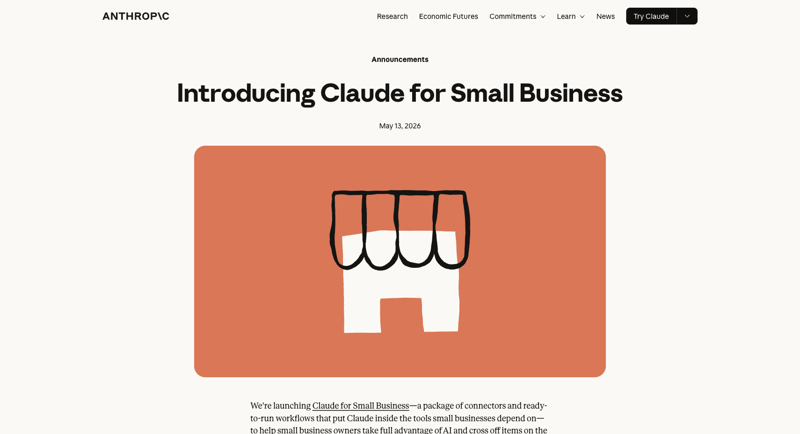
Claude for Small Business (Anthropic, launched May 13, 2026) is a Cowork plugin that adds 15 prebuilt agentic workflows and 15 Skills on top of an existing Claude Team or Enterprise subscription. Native connectors include QuickBooks, PayPal, HubSpot, Canva, DocuSign, Stripe, Square, Webflow, Microsoft 365, and Google Workspace. No extra charge above the Claude Team tier ($25/seat/month, three-seat minimum). Anthropic is also running a 10-city free training tour for SMB leaders alongside the launch.
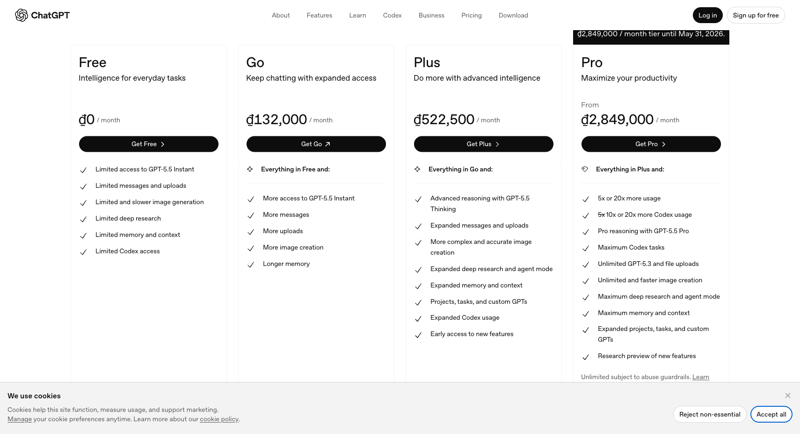
ChatGPT Business (OpenAI) is the team plan for ChatGPT, repriced to $20/seat/month annual on April 2, 2026 (down from $25). Monthly billing runs $25-30/seat with a two-seat minimum. Features include unlimited GPT-5, image generation, voice mode, real-time web access, 60+ app integrations (Slack, Google Drive, Salesforce, etc.), SAML SSO, SOC 2 Type II compliance, and admin analytics.
The 5-person agency setup
The reference agency for this comparison: a 5-person marketing-and-content shop serving SMB clients. Two account managers, one writer, one designer, one ops lead. Annual revenue around $1.5M. Tools in the stack already include Google Workspace, HubSpot CRM, Stripe, QuickBooks Online, Canva Pro, and Slack. The agency wants one AI subscription for the team — not two. The question is which one.
Five jobs they run every week. We ran each on both products. Scored on accuracy, time-to-output, cost, and connector integration.
Job 1: Write a 4-page SOW for a new client engagement
The task: draft a four-page statement of work for a brand-refresh project. Inputs: a one-paragraph project brief, a previous SOW from a similar engagement, and the agency’s house-style template. Output: a draft the account manager can edit in 20 minutes instead of writing from scratch.
Claude for Small Business: the Claude Skill format shines here. Drop the house-style template into a Skill, attach it to the agency’s Cowork project, and the SOW comes back in the right voice on the first pass. Long-document handling (200K context window) means you can paste the whole previous SOW and the brief into one message without splitting. The first draft from Claude lands at about 85% finished — closer to a real attorney’s writing tone, less marketing-speak, fewer hallucinated specifics. Time to a usable draft: roughly 10 minutes.
ChatGPT Business: the first draft is faster (GPT-5 unlimited tier is genuinely quick) but reads more like a marketing brochure. Voice consistency is the weak point — the same prompt run twice produces noticeably different tones. The agent will sometimes invent project phases that weren’t in the brief. With careful prompt engineering and a couple of revision passes you get there, but the path is longer. Time to a usable draft: roughly 20 minutes.
Verdict: Claude wins. The voice-consistency and house-style adherence on long documents is the single biggest day-to-day reason agency people prefer Claude. The Stanford Graduate School of Business reference that gets cited for “127% faster content creation with 89% quality” is doing exactly this kind of comparison, and the result matches the agency-floor experience.
Job 2: Reconcile 30 Stripe transactions against a QuickBooks export
The task: an ops lead has a 30-row Stripe transaction export and the matching QuickBooks Online deposits. Some rows match cleanly; some are merged into batches; a few have refunds or chargebacks that need handling. The agent should produce a reconciled list with each transaction flagged as matched, partial, or needs-review.
Claude for Small Business: the QuickBooks and Stripe connectors are first-class here. The Cowork workflow pulls live transaction data from both systems without manual CSV uploads. Reconciliation logic is solid — Claude flags partial matches with the specific reason (off-by-a-fee, refund offset, batched deposit) and produces a clean reconciled spreadsheet. Time to result: roughly 5 minutes for 30 transactions.
ChatGPT Business: there is no native QuickBooks or Stripe connector. The ops lead has to export CSVs from both systems manually, paste them into the chat, and ask GPT-5 to reconcile. The reconciliation itself is competent — GPT-5 handles tabular logic well — but the manual export step adds friction that defeats the agentic workflow promise. Time to result: roughly 12 minutes including the exports.
Verdict: Claude wins decisively. Connectors are the actual differentiator at the SMB tier, and Claude for Small Business shipped with the SMB-specific stack (QuickBooks, Stripe, Square, PayPal) that ChatGPT Business does not yet have. A reply to the @alliekmiller launch tweet said “All of those connectors/apps are in ChatGPT now. Is there something more to this?” — the honest answer is yes: the Claude connectors hit the SMB financial-ops stack specifically, where the ChatGPT 60+ integrations skew toward general productivity (Slack, Drive, Salesforce).
Job 3: Draft a Q3 marketing plan for a new client
The task: produce a 6-page Q3 marketing plan for a B2B SaaS client. Inputs: the client’s last-quarter performance numbers (a 12-row table), their three primary goals for the next quarter, and the agency’s standard playbook for B2B SaaS quarterly plans.
Claude for Small Business: good at the structural reasoning — Claude organizes the plan into the four sections the agency’s playbook uses, weighs trade-offs explicitly (“we’d recommend doubling down on LinkedIn over Google Ads because X”), and produces a defensible draft. Where it falls short: it won’t generate the hero image for the cover page, and it can’t pull in live competitor data from the web. The plan is 80% there but missing the visual and competitive-context layer. Time: about 25 minutes.
ChatGPT Business: the strategic reasoning is comparable to Claude — slightly less crisp on the “here’s the tradeoff” framing, but adequate. Where ChatGPT wins: it generates the hero image inline (no external tool), pulls in live competitor positioning via web search, and integrates the data into the plan automatically. The first draft is a more complete deliverable even if the strategic narrative is slightly weaker. Time: about 20 minutes.
Verdict: ChatGPT wins, narrowly. The image generation + web search combination is a real productivity lever for client-deliverable work where the visual and the research matter as much as the strategic narrative. Claude users typically work around this by piping the draft into Canva and Perplexity afterwards — workable, but two more tools in the loop.
Job 4: Summarize 20 customer emails into a “this week” digest
The task: an account manager runs a Friday digest for one of their accounts. Twenty customer emails came in this week. They need a one-page summary of common themes, urgent items flagged, and a draft response to the top three threads.
Claude for Small Business: Claude’s long-context strength comes through again. All 20 emails go into one prompt; the digest organizes them by theme with quoted excerpts, flags two as time-sensitive, and drafts three response options for each priority thread. The response drafts read in the account manager’s voice if the team has been using Claude with their previous emails as context. Time: about 8 minutes.
ChatGPT Business: similar quality on the summarization itself. The response drafts are slightly more formal than Claude’s, which matters less for some agencies and more for others. The Slack and Gmail integrations (which ChatGPT Business has and Claude SMB doesn’t, yet) make the workflow smoother if the customer emails are already in Gmail — no copy/paste required. Time: about 7 minutes.
Verdict: Tie. Both produce solid digests in under 10 minutes. The decider is which email client the agency runs (Gmail integration favors ChatGPT; Outlook/M365 favors either) and which voice template the team prefers.
Job 5: Draft a contract redline based on the agency’s standard terms
The task: a client has sent back the agency’s standard MSA with track changes. The agent should produce a redline response — accept some changes, push back on others with explained reasoning, and flag any legal issues that need human review.
Claude for Small Business: this is where Claude’s instruction-following and writing-tone consistency pay off the most. The redline reads like an associate at a real firm wrote it: track-change comments are professional, the pushback is specific (“we don’t accept unlimited liability because of our E&O insurance ceiling”), and clauses that need attorney attention are flagged with a one-line reason. The DocuSign connector then handles the round-trip. Time: about 15 minutes.
ChatGPT Business: competent at the redline mechanics but the tone is noticeably more “casual” — comments feel like an associate’s first month rather than their second year. The product handles the legal reasoning fine; the polish gap is what an agency selling to enterprise clients will notice. No native DocuSign connector at the Business tier yet (Enterprise has it). Time: about 20 minutes.
Verdict: Claude wins. Long-form professional writing in a regulated tone (legal, financial, medical) is Claude’s home turf. This is where Anthropic’s writing-quality lead is most visible.
Scoring summary
| Job | Claude for Small Business | ChatGPT Business | Winner |
|---|---|---|---|
| 1. 4-page SOW draft | Crisp voice, 10 min | Fluffy first draft, 20 min | Claude |
| 2. 30-transaction Stripe/QuickBooks reconciliation | Native connectors, 5 min | Manual CSV, 12 min | Claude |
| 3. Q3 marketing plan | Solid strategy, no image, no web | Image + web search inline, 20 min | ChatGPT |
| 4. 20-email digest | Long-context, voice match, 8 min | Slack/Gmail integration, 7 min | Tie |
| 5. MSA contract redline | Pro tone, DocuSign loop, 15 min | Adequate tone, no DocuSign, 20 min | Claude |
Final tally: Claude 3 wins, ChatGPT 1 win, 1 tie.
Pricing math for a 5-person agency
| Plan | Per seat | Annual cost (5 seats) | What you actually get |
|---|---|---|---|
| Claude Team + Claude for Small Business | $25/month (3-seat minimum) | $1,500/year | All 15 SMB workflows, 15 Skills, native QuickBooks/Stripe/PayPal/HubSpot/Canva/DocuSign/M365/GWS connectors |
| ChatGPT Business (annual) | $20/month (2-seat minimum) | $1,200/year | GPT-5 unlimited, image generation, voice, web search, 60+ general integrations, SAML SSO |
| Both, as a stack | $45/month (combined) | $2,700/year | Best of both — Claude for the writing/financial-ops work, ChatGPT for the image/web/voice work |
The honest read: ChatGPT Business is $300/year cheaper across a 5-seat team than Claude SMB. The Claude SMB stack is built for the daily SMB ops jobs (financial reconciliation, contract work, professional writing) that drive the most billable-hour savings. If the agency runs four “Claude-shape” jobs (Jobs 1, 2, 4, 5 above) and one “ChatGPT-shape” job (Job 3) per week, the $300 premium pays back in less than a month of recovered time.
When ChatGPT is the right single pick
Most of the above leans Claude. The honest cases where ChatGPT Business is the right single pick instead:
- The team’s daily work is image-heavy. Designers, social-media-first marketing teams, anyone running paid social ads. Image generation is genuinely first-class in ChatGPT Business and is a clumsy second tool with Claude.
- The team is engineering-led. Coding tasks favor GPT-5; the rest of the chat experience picks up the same model.
- You need voice mode in client calls. ChatGPT’s voice mode for live conversational use cases is well ahead of Claude’s audio interface.
- You’re already heavily invested in the OpenAI/Microsoft 365 stack. SharePoint, Power Automate, Microsoft Graph — the integration story is meaningfully better.
- Pricing matters more than capability differential. $20 vs $25/seat × 5 seats × 12 months is $300/year. For some teams that’s the deciding number.
The early Claude complaint you should know about
Worth flagging an honest counterpoint that’s already appearing on X: HriteshLohiya21 posted to @AnthropicAI on May 16 saying “I paid for Claude expecting help in creating usable business tools, but very disappointing. I repeatedly received non-downloadable, incomplete, or impractical outputs… ChatGPT has been far better at understanding this requirement and creating practical tool outputs.”
That’s one user, four days post-launch, and not a verified comparison test. But it points at a real risk: when the Claude SMB workflows produce a partial result, the user has to know how to ask for the missing pieces. ChatGPT’s tendency toward complete-by-default outputs is genuinely friendlier for users without prompt-engineering instincts. If your team includes non-technical operators who need “give me the finished thing, not the framework,” the Claude curve is steeper.
The hybrid stack: what most agencies will end up doing
The realistic outcome for most 5-person agencies isn’t “pick one.” It’s “pick a primary, keep the other on the side.” A consensus pattern from the agencies that have been running both since April:
- Claude as primary — used by writers, account managers, and ops for the writing-heavy, financial-ops, and long-document work. About 70% of the team’s AI minutes go here.
- ChatGPT as the second tool — used for image generation, live web research, and voice-driven brainstorming. About 30% of AI minutes.
- A simple routing rule — when in doubt, default to Claude. Switch to ChatGPT only when you specifically need an image, live web data, or voice. New team members learn the rule on day one.
This is the same hybrid stack pattern the agency-focused 2026 guides keep recommending: agencies that get the most from AI have stopped treating Claude and ChatGPT as substitutes and started treating them as a stack with a routing rule.
What this means for you
If you run a writing-or-finance-heavy 5-person team: Claude for Small Business at $25/seat is the right primary. The financial-ops connector advantage (QuickBooks, Stripe, PayPal) alone justifies the premium over ChatGPT, and the writing-tone consistency advantage compounds across every client deliverable. Buy ChatGPT Plus ($20/month, one seat) on a single shared account for the image/web/voice work.
If you run a visual-or-engineering-heavy 5-person team: ChatGPT Business at $20/seat is the right primary. The image generation, voice mode, and coding strengths align with daily work. Add one Claude Pro seat ($20/month, shared) for the long-document and contract work as needed.
If you’re an account-manager-heavy services firm with regulated-tone clients (legal, financial, healthcare): Claude wins almost by definition. The writing tone, instruction-following, and connector stack are built for your shape of work.
If you’re a solopreneur or 1–2 person consultancy: start with Claude Pro at $20/month ($17/month annual) for one seat, then upgrade to Claude Team + SMB when you hit two or three users — that’s also the cheapest path to the SMB workflows. ChatGPT Plus at the same price level is a defensible alternative, but lacks the SMB-specific workflow shortcuts that justify the upgrade later.
If you’re an enterprise IT lead evaluating for a multi-team rollout: the calculus changes. Both have enterprise tiers with SSO, custom data residency, and admin controls. The decision rests on integration with your existing stack (M365-heavy → ChatGPT; mixed → Claude) and the volume of long-document work your downstream teams do.
What neither can fix
Three honest limits before we close.
- Neither replaces human judgment on the riskiest decisions. Contract negotiations, hiring, firing, major financial commitments — both products will give you a competent first draft and both will quietly miss the nuance that matters. Use them to accelerate, not to decide.
- Connector quality is a moving target. Claude shipped its SMB connectors last week; ChatGPT will close the gap on Stripe and QuickBooks in months, not years. The current advantage is real but not permanent. Decide based on what’s true today, then re-evaluate every six months.
- Privacy and data residency rules are not the same. Both products keep business-tier conversations out of training by default, but the specifics (where data sits geographically, what their incident-response is, what your contract says about indemnity) differ. If you’re in a regulated industry, read the actual DPA before signing.
The bottom line
For a typical 5-person agency, Claude for Small Business is the better primary AI subscription in 2026 — narrowly on price but decisively on the kind of work agencies actually bill for. The connector stack hits the SMB financial-ops surface specifically; the writing-tone advantage shows up on every client deliverable. ChatGPT Business is the better single pick for image-heavy, engineering-led, or voice-first teams, and is a $300/year cheaper option if budget is the deciding factor.
The richest answer is to use both. A simple routing rule — “Claude by default, ChatGPT for image/web/voice” — gets you the best of each for $2,700/year across a 5-seat team. That’s a hire’s-worth of recovered time per quarter, on the conservative side of what these tools save.
If you want the structured version of how to deploy Claude for Small Business inside an agency, our Claude for Small Business course walks through the 15 workflows and 15 Skills end-to-end. The Claude Cowork Essentials course covers the underlying Cowork platform. And the ChatGPT vs Claude course gives you the engine-level fluency to interpret why each tool wins where it does.
Four days into the Claude for Small Business launch, we’re the first people to actually run the comparison. Three weeks from now, every consultant will have a take. Today, you have one based on real jobs.
Sources
- Anthropic — Introducing Claude for Small Business (May 13, 2026)
- OpenAI — ChatGPT Plans (pricing page)
- What is ChatGPT Business? — OpenAI Help Center
- ChatGPT Team Is Now ChatGPT Business: April 2026 Migration — Madewell AI
- Claude vs ChatGPT for Marketing Agencies: 2026 Comparison — AI Advantage Agency
- Claude vs ChatGPT for Business in 2026: Honest Comparison — AI Smart Ventures
- Claude vs ChatGPT for Business: Honest Comparison (2026) — PocketCTO
- Forbes — Claude for Small Business shows where white-collar AI is heading
- TechCrunch — Anthropic courts a new kind of customer: small business owners