Sometime this summer, your shop’s phone will ring, and the voice on the other end won’t be a homeowner. It’ll be Google’s AI, calling on a homeowner’s behalf, asking for your pricing and your soonest opening. You’ll have about 90 seconds to give a clear answer. If nobody picks up — and right now roughly one in four of these calls goes unanswered — the AI moves on to the next shop on the list and quietly files you under “businesses we couldn’t reach.”
That’s not a pitch from some marketing agency. It’s how Google’s “Ask for Me” feature works, and it’s rolling out to home repair across the US right now.
The good news: getting picked mostly comes down to basics you can check in 15 minutes. Here’s the check.
What just changed
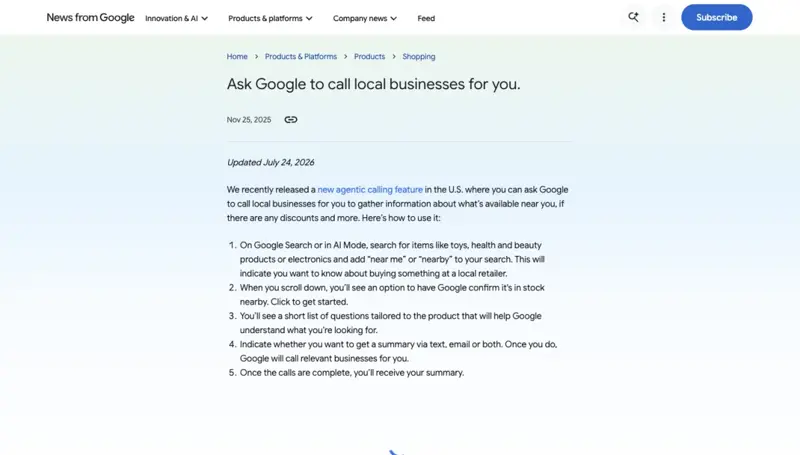
Google has been testing “Ask for Me” since January 2025, when it quietly launched in Search Labs for nail salons and auto repair shops. At Google I/O this May, the company announced the part that matters to the trades: home repair — plumbing, HVAC, electrical, roofing — is one of the categories rolling out to everyone in the US this summer. No more limited test. Every homeowner with Google on their phone gets it.
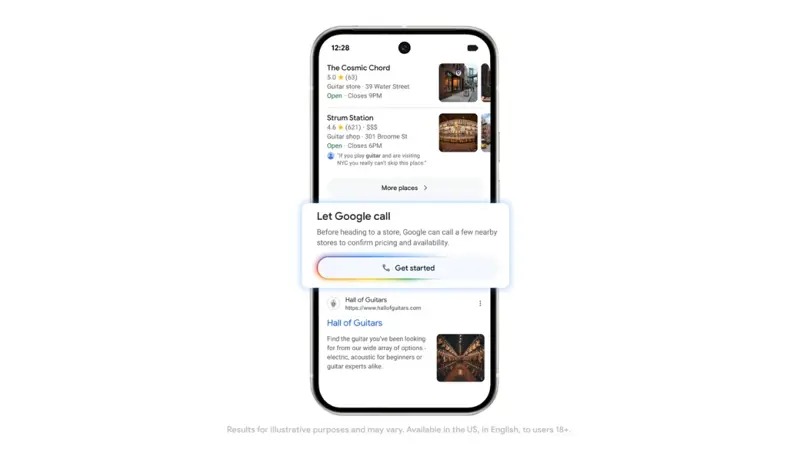
Here’s what happens on the homeowner’s side. They search “plumber near me,” and next to the results they see an option like “have AI check pricing.” They tap it, answer a few short questions — what’s broken, when they need it fixed, roughly what they expect to pay — and pick text or email for the results. Then Google’s AI starts calling local shops.
On your side, the call opens with a disclosure. Something like: “Hi, I’m calling on behalf of a customer who had some questions. This is an automated service from Google, and the call is monitored and recorded.” Then it asks direct questions — price for the job, earliest availability — and wraps up, usually in under two minutes. Within about half an hour, the homeowner gets a tidy comparison of every shop that answered with real numbers.
And every shop that didn’t.
The part nobody tells you: most shops are losing this call already
Call-tracking firm Invoca followed these AI calls through late 2025, and the numbers should make every shop owner wince:
- Plumbing-related AI call volume jumped more than 650% in a single month as the feature spread.
- 26% of calls went completely unanswered. Those shops landed in the “couldn’t be reached” bucket — shown to the homeowner below every competitor who picked up.
- Of the shops that did answer, 48% couldn’t or wouldn’t give pricing. “You’d have to talk to the owner” is a dead end when the caller is an AI comparing you against three shops that gave a range.
So before a homeowner ever sees your name, you’ve passed or failed a test you didn’t know you were taking. The AI doesn’t leave a voicemail. It doesn’t call back. It just ranks the shops that answered.
One more thing that decides whether you even get the call: Google’s AI only dials businesses that already show up in local search results for the query — typically the top handful in the map pack. Your Google Business Profile isn’t just your storefront anymore. It’s the guest list.
The 15-minute readiness check
You don’t need new software for any of this. You need a phone, your Google Business Profile login, and 15 minutes.
1. Search like your customer (2 minutes)
Open Google in an incognito window and search “[your trade] near me” and “[your trade] [your town].” Are you in the map pack — the top three-to-five businesses on the map? If yes, you’re on the AI’s call list. If no, the AI never dials you, and that’s your real problem to fix first (reviews, service areas, profile completeness — the classic local SEO basics still decide everything here).
2. Audit your Business Profile like an AI would read it (4 minutes)
Log into your Google Business Profile and check three things:
- Hours. If your listed hours are wrong, the AI calls when you’re closed and you land in the unreachable bucket. Not because you missed a call — because your profile lied about when you answer.
- Services. Is every service you actually do listed? The AI matches the homeowner’s request (“water heater replacement”) against your listed services.
- Pricing. This is the big one. Fill in price ranges on your services — “$95–$150 service call” beats a blank field, and both beat “call for pricing.” Industry analysts tracking the rollout report that a profile with no pricing data can get skipped for the comparison entirely, even when it ranks well.
3. Fix the phone answer (3 minutes to decide, longer to implement)
26% of these calls die at an unanswered phone. Ask yourself honestly: who picks up when you’re under a house or up a ladder? Your options, in rough order of cost:
- A family member or office person briefed on the script below
- Call forwarding to whoever’s off the tools that day
- An answering service or an AI receptionist that can quote your posted ranges after hours
You don’t have to buy anything today. But “it goes to voicemail” is now the same as “we don’t want the job,” because the AI treats them identically.
4. Write the 90-second answer sheet (5 minutes with AI)
Whoever answers your phone needs to handle this call in four moves: confirm the service, give a price range, give the earliest window, offer a next step. That’s it. No life story, no “well, it depends” for 90 seconds.
Paste this into ChatGPT (free version is fine) and fill in the brackets:
I run a small [trade] business in [city]. Google's AI now calls local
shops on homeowners' behalf asking for pricing and availability, and
whoever answers my phone needs a one-page answer sheet.

My common jobs and rough price ranges are: [list 5-8 jobs with ranges,
e.g., "water heater replacement $1,400-$2,200"].
My typical availability is: [e.g., "next-day for emergencies, 3-5 days
for standard jobs"].
My service area is: [towns/zips].

Write me:
1. A one-page phone answer sheet with each job and its range, worded
   so a receptionist can read it aloud naturally.
2. A 4-line script for answering an automated pricing call: confirm
   the service, state the range, state availability, offer to book.
3. A polite one-liner for jobs we don't do, naming the kind of
   company they should call instead.
Keep it plain and friendly. No jargon.
Print the result. Tape it next to the phone. Update the ranges when your costs change.
5. Know where the off switch is (1 minute)
If you decide you don’t want these calls, the setting lives in your Business Profile under More → Business Profile settings → Advanced settings → “Google automated calls and text messages.” Toggle off “bookings and inquiries from customers.”
Our honest take: leave it on. Opting out doesn’t just stop the calls — it removes you from every comparison those homeowners see. And Google notes you may still get occasional manual verification calls anyway. The shops that win this shift will be the ones that got good at the call, not the ones that ducked it.
What this means for you
If you’re a one-van operation: You can’t answer the phone from a crawlspace, and that’s fine — the fix isn’t heroics, it’s the answer sheet plus a forwarding plan. Do steps 1, 2, and 4 today. Your competitors are big enough to have office staff; you’re small enough that your Business Profile can be more accurate than theirs. That’s the fight you can win.
If you run a small shop with an office manager: Brief them this week. The four-move script, the pricing sheet, and one rule: an automated call from Google is a real customer wearing a robot mask. Treat it like the best lead of the day, because it might be — the homeowner behind it explicitly asked Google to go get quotes.
If you’re an established company with CSRs: Add “AI-mediated calls” to your call training, and add call-source tracking if you don’t have it. You want to know whether these calls convert like your direct inbound. If they don’t, the gap is your script, and you’ll want to find that out in August, not at Thanksgiving.
If you’re booked solid and don’t want more leads: Still do step 2. Wrong hours or a stale profile means the AI reports you as unreachable — and homeowners remember “couldn’t be reached” longer than you’d like when their neighbor asks for a recommendation next spring.
If you run a salon, groomer, or pet-care business: You’re in this rollout too — beauty and pet care shipped alongside home repair. Same checklist, same 15 minutes. Your “jobs” are services and your “ranges” are your price list, which you probably already have. You’re closer to ready than the plumbers are.
What this can’t fix
It can’t rank you. The AI calls shops that already show up in local results. If you’re on page two, the feature is invisible to you — the boring work of reviews, accurate categories, and service-area settings still comes first.
Answering the call doesn’t win the job. The homeowner still picks from the comparison. If your range is honest and your availability is real, you’re competing on the right things — but you’re competing, visibly, on price and speed in a way phone-shy shops never had to before.
It’s uneven right now. Early users report the results summary sometimes takes days instead of minutes, and call volume is spiky as the rollout spreads region by region. Expect weirdness through the fall.
It’s US-only for now. If you’re reading this from Canada or the UK, you’ve got a preview of your future, not your present. (Canada is widely expected to follow in 2026.)
It can’t make your pricing decisions. Publishing ranges feels exposed, especially in trades where every job is “it depends.” The shops handling this well publish honest ranges with a floor — “from $95” — and let the AI carry that number instead of a blank.
The bottom line
Google didn’t ask the trades whether they wanted an AI middleman on the phone. It shipped one. The shops that treat this like the 2026 version of “get in the phone book” — profile accurate, pricing visible, phone answered, script ready — are going to quietly take jobs from the shops still letting it ring.
Fifteen minutes. One checklist. Your phone was going to ring anyway; the only question is whether the robot on the other end writes you down as a price and a time slot, or as “couldn’t be reached.”
Want the full playbook for getting found by AI — not just Google’s caller, but ChatGPT and every other assistant homeowners now ask for recommendations? Our AI Visibility for Local Business course walks you through it step by step, and the first two lessons are free.
Sources
- Google — How to ask Google to call local businesses for you
- Google — Search updates at I/O 2026
- Search Engine Journal — Google Search Can Now Call Local Businesses Using AI
- The Verge — Google’s “Ask for Me” calls businesses on your behalf
- EnvisionUP — Google’s AI Is Calling Local Businesses. Is Your Team Ready?
- Google Business Profile Help — About automated calls from Google on behalf of customers
- JobNimbus — How to Get Found When Google’s AI Calls Contractors
